
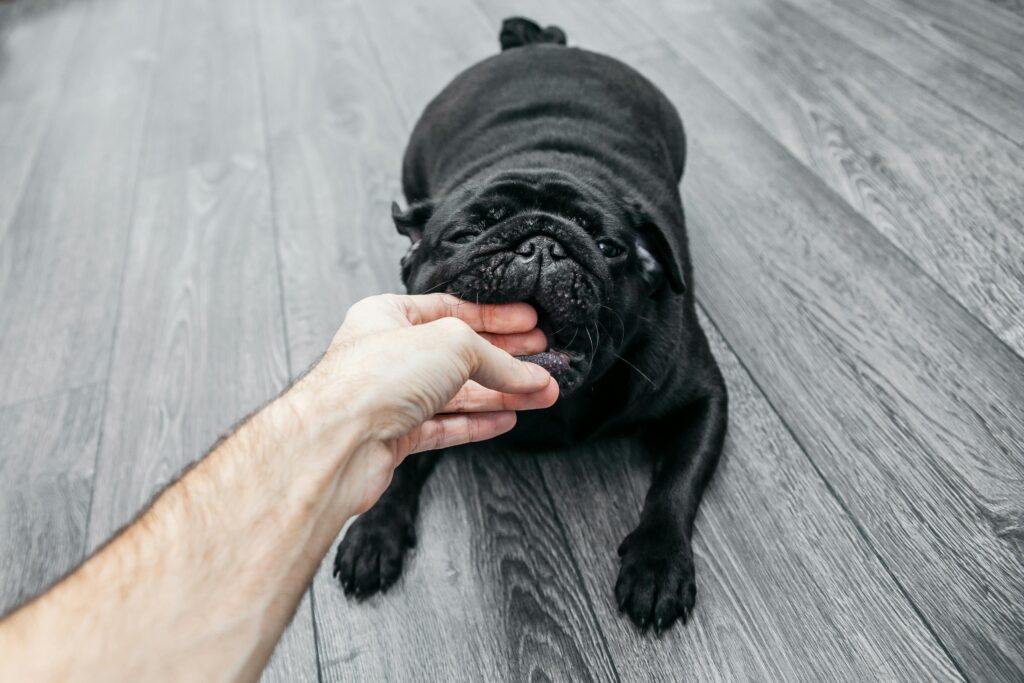
For many new pet owners, two things are the most common behavioral issues with their new puppies – those little pearly whites might look cute now, but they will quickly turn into painful and annoying habits if left unchecked.
But the great thing about puppy biting is that it’s totally normal. Puppies use their mouths to figure out the world; they use their mouths to interact with people and other dogs, and they use their mouths to play. And they still need to learn to know how hard is too hard.
Teaching your puppy to stop biting requires patience, consistency and lots of positive reinforcement. Punishing your puppy severely (using yelling, hitting etc.) is rarely ever helpful and can create much worse behavioral problems than what was intended.
Why Do Puppies Bite?
Knowing why puppies bite is key to helping you understand how to handle the situation correctly. At some point between 3 and 6 months old, puppies lose their “baby” teeth and get permanent teeth. During this period of rapid dental growth, babies use their mouths to chew and to ease their gum pain.
This is a normal part of development.Puppies are naturally curious creatures and are trying to figure everything out with their mouths. They chew on shoes, couches, hands and anything else they can find. This is also a normal part of their development.
Another main reason for nipping is due to playful behavior. Young puppies nip each other constantly when they’re playing with their littermates. As they play together, the young puppies learn what’s too hard and what’s not too hard.
A small percentage of puppies bite just because they want your attention. If the puppy realizes that biting gets a reaction from you every single time he does it, then the puppy will think he’s getting rewarded for his actions.
Finally, overexcitement, fatigue, boredom or lack of physical exercise all can lead to impulsive biting. A very over stimulated puppy or a tired puppy may have no control over their impulses and will frequently engage in mouthy behavior.
Teaching Bite Inhibition
Bite control refers to a puppy’s ability to determine how hard or soft their jaws are going to be when they grab something. Typically, young puppies learn bite control from their mothers and their littermates through play. When a puppy bites another puppy too hard, that puppy yips (lets out a high-pitched cry) and stops playing. That teaches the puppy that when they bite too hard, there is no longer fun!
Once you take a puppy home, you’ll start teaching your puppy bite control. Learning bite control is crucial because adult dogs may occasionally mouth during times of stress. A puppy who has learned not to mouth aggressively is far less likely to hurt someone badly.
How to Stop Puppy Biting
Redirection is probably the best method for stopping puppy biting. Every time your puppy bites your hand, foot or clothes, replace whatever your puppy is biting with an acceptable chew toy right away. This teaches the puppy what is okay to bite.
Good alternatives to chew toys include rubber chew toys, rope toys, frozen teething toys, and food puzzles. The key here is being consistent so your puppy knows exactly what is an acceptable chew toy vs. human skin.
Rewards for Calm Behavior
Reward your puppy for calm behavior with praise, treats or continued playtime. Your puppy will learn which behaviors result in rewards.
Stop Play
If your puppy begins nipping during play, immediately stop interaction with your puppy until your puppy calms down. Simply stand up, walk away or put the game on hold for a couple minutes. Puppies learn rapidly that when they display aggressive or rough behavior during play, they lose the opportunity for additional attention and/or play.
Obedience Training
Impulse control is improved with basic obedience training. Using commands such as sit, leave it, drop it and gentle can help your puppy focus and learn impulse control. Remember, training should occur consistently and in short intervals due to the limited attention span of young puppies.
Calm Behavior
Just as importantly as providing enough opportunities for active play (and therefore burn off), encourage your puppy to remain calm. Over-stimulation leads to increased likelihood of your puppy becoming mouthier. Try to limit rough play and allow for regular periods of quiet rest throughout the day.
Best Chew Toys for Teething Puppies
During teething (which occurs between 3-6 months), chewing provides relief for sore gums. Durable rubber chew toys help provide that relief while allowing your puppy to express their natural urge to chew.
Cold items are also useful for soothing sore gums. Items such as frozen carrots, cold chew toys, and frozen wash cloths are commonly used for teething relief. Always supervise your puppy when giving him something to chew on.
Food-dispensing toys/puzzles are especially beneficial because they challenge your puppy mentally and give them something to chew on. Providing adequate mental stimulation can significantly decrease boredom-based biting.
Common Mistakes Owners Make
One of the most common mistakes made by owners is punishing physically. Using force against your puppy (such as slapping them, hitting them, yelling at them) can ruin trust and cause fear or anxiety based behaviors.
Another mistake owners make is encouraging rough play. Engaging in games with your puppy where you chase after their hands or wrestle can inadvertently teach them that biting humans is acceptable. Never treat anyone’s hands as a toy.
Consistency is also vital in developing successful training strategies. When family members are inconsistent in applying rules regarding play-fighting/biting, confusion develops in your puppy and can hinder progress in training. All family members must enforce similar rules.
In addition to creating behavioral problems through punishment, rough play and inconsistent application of rules, lack of exercise or mind stimulation may also lead to excessive mouthing. Bored puppies tend to be more destructive than well-exercised ones.
Managing Puppy Energy
Improving biting problems in puppies often involves ensuring that puppies receive adequate physical activity, exercise, mental stimulation, and rest.
Regular daily exercise allows your puppy to burn off excess energy. Activities will vary depending on the age or breed of your puppy (i.e., a 2-month-old Lab would require vastly different exercises than a 7-month-old Corgi). Some examples of suitable activities include short walks, fetch play sessions, structured play sessions supervised by an owner, and supervised socializations with other vaccinated puppies/dogs.
Mental stimulation is also equally valuable as physical stimulation. Puzzle feeder toys, obedience training, nose work games, and interactive toys are excellent ways to provide mental stimulation for puppies and mentally stimulate them sufficiently enough to exhaust themselves as much as physical stimulation.
Rest is just as critical as physical exercise and mental stimulation. Tired puppies act similarly to exhausted toddlers and experience loss-of-control episodes. Provide plenty of naps throughout the day for your puppies and consider establishing routine quiet-time periods to minimize mouthing.
Socialization and Training
Bite prevention education through socialization will help teach your pup how to act in an acceptable manner around humans, other pets and the world at large.
Exposure to many things such as many different people, many different dogs (all have been vaccinated), many different household noises, many different surfaces, and many daily experiences that would normally create fear in some pups, will increase your pup’s confidence. This will decrease fear-based reactions. Puppy training classes under the supervision of experienced trainers can enhance both your pup’s social skills and their ability to control their bites. Early socialization is one of the most significant aspects of raising a well-behaved adult dog.
When Biting May Be a Serious Problem
The majority of puppy biting is normal and develops into less biting as the puppy matures and learns from its owners. There are times when biting could indicate something more serious than typical puppy biting.
These warning signs include: stiff body positioning while being handled, growling while being handled, resource guarding, fearful biting, and biting that is aggressive rather than playful. Also, if there are unpredictable responses to your actions, you should take this very seriously.
You should contact either your veterinarian or a certified dog trainer for assistance. Some medical conditions, anxiety, or lack of good socialization may cause some problems.
Conclusion
As previously discussed, it is completely normal for young puppies to exhibit behavior associated with biting and nipping; however, all puppies require structure and direction so they can learn acceptable manners. A combination of patience, consistent training methods, utilizing positive reinforcement techniques, providing your puppy with plenty of exercise, and clearly setting boundaries provides the best possible environment for developing a confident, gentle, and well-mannered adult dog.
Redirecting your puppy’s attention away from chewing/nipping you towards toys, rewarding good behavior when your puppy remains calm, and avoiding physical punishment will greatly assist in reducing undesirable behaviors exhibited by your puppy. While it takes time for your puppy to grow up and become less impulsive, with the correct amount of socialization and training provided to your puppy, he has every opportunity to grow up into a wonderful companion animal.
Related reading: Leash Training for Puppies, Crate Training Tips for Puppies, Crate Training a Puppy: Complete Beginner Guide