
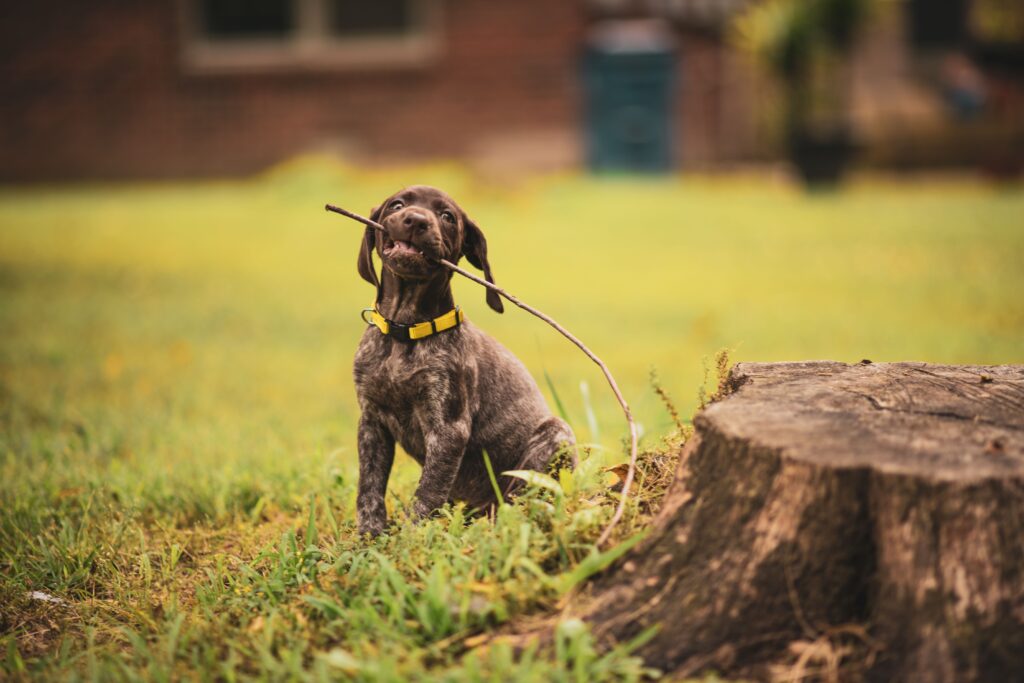
A crucial part of owning a dog is training the puppy. As puppies learn how to act appropriately, they will gain more confidence and improve their ability to socialize with both humans and animals, as well as their physical environment. Using treats to train puppies is one method, but there are many ways that puppy owners use to train their puppies besides using treats. Many puppies can learn by getting praise, playing with their owners, being shown love and affection, and other rewards that strengthen the bond between the puppy and the owner.
Treat-free training is an approach to training puppies that focuses on identifying what type of motivation will induce a puppy to behave in a desired manner. Properly executed, treat-free training helps establish strong obedience while minimizing the risk of excessive reliance on food rewards for puppy training.
Can Puppies Be Trained Without Treats?
Yes, it is possible. Puppies do not require treats to be trained. Instead, they need a reward that has value to them, as a reward is anything that motivates a puppy to repeat specific actions. For some puppies, food provides a high level of motivation, whereas other puppies may respond with equal enthusiasm to such things as toys, games of fetch, verbal praise, and/or physical affection from their owners.
Regardless of the type of reward used to train the puppy, the same principle applies. By providing a positive reward to a puppy immediately after he/she engages in a desired behavior, that puppy increases the likelihood that he/she will repeat the same action in the future.
Motivations for Puppy Training
Each puppy has its own personality, preferences, and motivators. Some puppies thrive on the attention they receive from their owners and love to be petted; others become excited when they find an interactive toy and can interact with it. Identifying what your puppy finds to be the most rewarding is the first step toward successfully using a treat-free training method.
You can observe your puppy during different daily activities to learn what he/she finds interesting, what excites him/her, and what he/she seeks out the most. These items, when identified, become powerful training rewards.
The Importance Of Rewards Even Without Food
Rewarding your puppy, whether with food or something else, tells him/her which behaviors are desirable. Therefore, without rewards, it becomes more difficult for puppies to learn, as the absence of a reward slows down and obscures the learning process. The type of reward can be anything the puppy enjoys, such as verbal praise in an upbeat voice, his/her favorite toy, or engaging in an enjoyable activity. Regardless of what is used as a reward, the goal of the reward is to create a value for proper behavior from the puppy’s point of view.
Building a Strong Foundation for Training
Creating Trust and Engagement
The basis for effective puppy training rests on a solid bond between owner and puppy. Puppies will learn better when they feel comfortable, secure, and connected with their human handlers than if they do not.
Building relationships by spending quality time playing, walking, grooming, and gently handling puppies will help establish a trusting bond. As your puppy learns to associate you with good things in terms of positive affection, your attention and forms of approval will become strong motivators.
Puppies that enjoy interacting with their owners tend to be more willing and enthusiastic about learning and cooperating during training exercises.
Finding Suitable Non-Food Rewards
Certain types of rewards may work for some puppies but not for others. It may take some time to discover the most effective motivator(s) for your puppy.
Verbal Praise
Many puppies enjoy hearing an enthusiastic, encouraging voice. Simple phrases such as “Good puppy!” or “Well done!” can have a great impact as long as they are consistently delivered with sincerity and enthusiasm.
The tone of the voice often has a bigger impact on a puppy’s reaction to training than the specific words used. Puppies tend to be particularly responsive to upbeat and positive forms of communication.
Toys and Games
Energetic puppies will often respond very well to toys as motivators. A quick game of tug-of-war or fetch after a successful training session can provide an excellent form of reward.
Games of interaction not only improve the connection between owner and puppy, but they also provide both physical and mental stimulation.
Physical Contact and Attention
Certain puppies are often more highly motivated by physical contact with human handlers. Gentle stroking, ear tickling, belly rubbing, or simply getting attention are good ways to reinforce desired behaviours in certain puppies.
However, it is important to recognize that every puppy won’t react to physical contact the same way. Always monitor your puppy’s body language and notice what forms of physical contact he/she prefers.
Natural Environmental Rewards
Environmental rewards include giving puppies access to things they already want by allowing them to go outside, meet new visitors, explore new environments, or go on walks after exhibiting desired behaviours.
These types of rewards are effective because they will naturally occur throughout daily experiences.
Effective Training Methods Without Treats
Using Positive Reinforcement
Using positive reinforcement is an effective form of training that is also one of the best ways to train your dog. Positive reinforcement is rewarding the behaviours you want your dog to repeat.
For example, when your puppy sits on command, provide them with praise, attention, and/or play immediately following their behaviour. Your puppy will learn over time that sitting=good things.
Through positive reinforcement, your puppy will build their confidence, and will encourage them to actively participate in the learning process.
Time is Important
Timing is one of the most important components of training. Always reward immediately when your puppy shows the behaviour you want them to repeat. If you wait too long to reward them, it will be hard for your puppy to remember why they received the reward. The more quickly you reward their behaviour, the stronger the bond between the behaviour and reward will be.
Use a Marker Word
A marker word indicates exactly when your puppy performs the correct behaviour. A marker word can be “yes!” or “good!” and it needs to be said at the same time you give your puppy a reward for their behaviour (praise, play, or affection). Over time, the marker word will have meaning and will enable your puppy to learn faster.
Keep Training Sessions Short
Puppies don’t have a long attention span. If you have long training sessions, they may get bored, frustrated, and lose their focus.
You would be better off having many short training sessions spread throughout the day (2-10 minutes each) for a day rather than one or two long sessions. Ending each session with a positive will keep your puppy motivated for their next training session.
Teaching Essential Commands Without Treats
Teaching Sit
The sit command is the first behavior puppies typically learn. When your puppy sits naturally, give immediate praise and/or a marker word such as “Yes!” to acknowledge this. Repeat this process consistently so the puppy associates the action with positive results. Once the behavior is consistently performed, add the verbal command “Sit” prior to asking the puppy to perform the action.
Come
A reliable recall command could be life-saving for your puppy in many circumstances. To teach the puppy to come when called, call the puppy’s name, followed by the word “Come” cheerfully.
Once the puppy arrives at your location, respond with excitement and praise. Play with the puppy and or give it affection to create a positive association with returning to you.
The goal is to demonstrate to your puppy that when he/she comes to you, it always leads to a positive experience.
Stay
Begin with small distractions and short periods of time. Request that your puppy sit, and then take a half step away. If your puppy remains seated, reward him/her with praise right away. Gradually increase both distance and time as your puppy becomes more comfortable and understands the command.
Teaching this command will require patience.
Down
To motivate the puppy to lie down, you may need to use gentle coaxing and repetition of the command. Once your puppy has succeeded in lying down, provide immediate praise or positive feedback.
To aid your puppy in understanding which behavior you are reinforcing, be consistent with your commands and how you reward your puppy.
When Treats May Still Be Useful
Even though it is possible to train puppies without using food as a reward, there are times when using treats may help a trainer to reinforce positive behavior. Examples of such situations include training in environments where distractions abound or where the dog is exhibiting behavior issues that make training difficult, as well as advanced-level training activities.
Treats may complement treatments that do not use treats. They may enhance training by increasing the number of times that treats will help the dog choose to obey rather than simply offering a reward for obedience.
Conclusion
Consistent positive reinforcement-based puppy training without the use of food rewards can be very effective if developed on a foundation of positive reinforcement methods, continual training consistency, and a strong bond between the puppy and owner.
Puppies learn good behavior by using alternative forms (besides food) to reward them with motivation for training and by utilizing alternatives such as praise, toys, love, playtime, and everyday situations.
Training programs with successful results encompass communication, patience, and trust. Training for puppies will allow the puppies the opportunity to be rewarded while having fun in a safe and secure training program, where they will learn. By providing a consistent training program that continues with positive training, an owner can build a well-behaved companion while forming a continuing strong bond for many years.
Related reading: How to Train Multiple Puppies at the Same Time, How to Stop Dog Aggression, Crate Training a Puppy: Complete Beginner Guide