
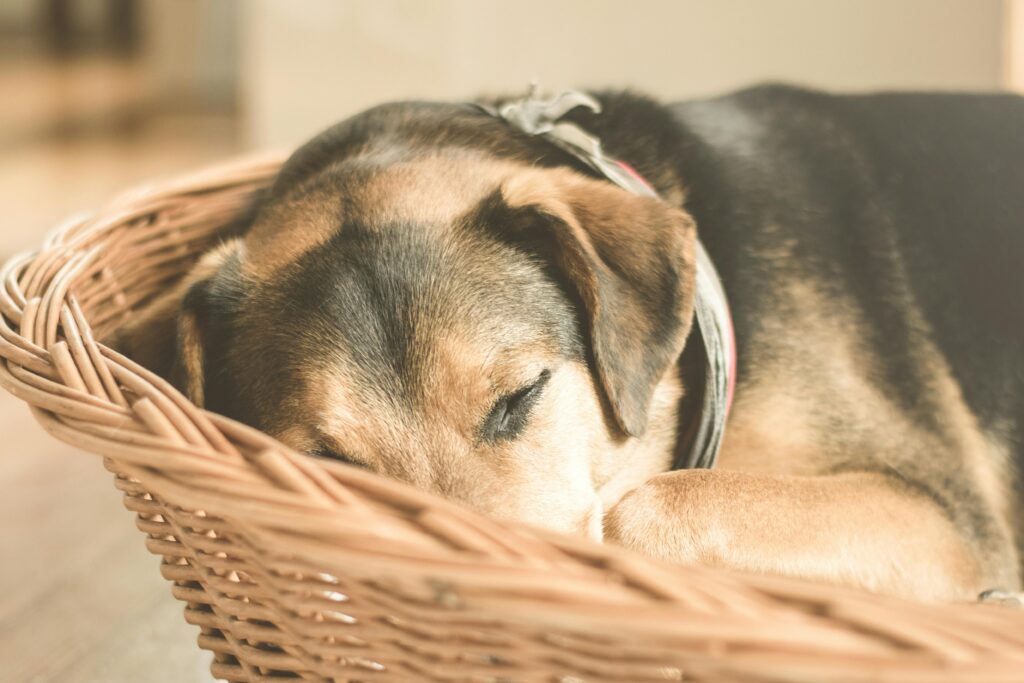
Sleep has a significant impact on your pet dog’s physical health, mental balance, and behaviour. Many pet owners are surprised to find out that dogs actually require far more sleep than people do, and also that their sleeping requirements can vary greatly by age, size, how active they are, and breed.
If you own a pet dog, then knowing about normal sleeping habits will help you identify healthy sleep habits as well as detect signs of stress, boredom, or sickness. Although most dogs sleep within a set range, there can be significant variation between different dogs in how they sleep.
Average Sleep Requirements for Dogs
Most adult dogs will average around 12 to 14 hours of sleep a day, while puppies and older dogs can average between 18 and 20 hours of sleep a day. However, dogs sleep for different periods than we do; dogs do not generally sleep for long periods of time. They generally take several naps during the day and at night; most often, these naps last between an hour and two hours. In addition, dogs are polyphasic sleepers, meaning they rest in multiple cycles, rather than one long cycle.
Puppy Sleep Needs
8 to 16 Weeks Old
Puppies from three to six months will continue to develop rapidly; the average sleep they get per 24-hour period is about 18-20 hours. While their bodies and brains are growing rapidly, sleeping is very important for development, learning, and immune support. Puppies will usually have short bursts of active play followed by prolonged periods of rest.
4 to 6 Months Old
Puppies will increase how long they can stay awake and continue to require a lot of rest at this stage. They tend to sleep for about 16 to 18 hours each day.
While training and playing can increase alertness, they easily tire out and will require taking more frequent naps.
6 to 12 Months Old
Adult dogs will typically receive 14 to 16 hours of sleep each day. With their growing activity level and curiosity, dogs will still require a specific amount of sleep so they’re not overstimulated.
Adult Dog Sleep Needs
Small Breeds
Breeds such as the Chihuahua, Pomeranian, and Shih Tzu are all smaller dogs and will usually sleep for 12 to 14 hours each day. Although these dogs tend to have short periods of activity, they will sleep again shortly after each period of activity.
Medium Breeds
Medium-sized dogs typically get around 12-14 hours of sleep daily, although this may vary based on activity level. Higher-energy breeds generally get less sleep than lower-energy breeds, so there could be a difference in sleep times.
Large and Giant Breeds
Large breeds, including Great Danes, Mastiffs, and Newfoundlands, will generally need between 14 and 16 hours of sleep daily due to their weight requiring longer to recover and conserve energy.
Senior Dog Sleep Needs
Senior dogs (over the age of 7-10, depending on breed) will generally get between 16-18 hours of sleep daily because, as they age, decreased energy will require additional rest to assist with maintaining joint function as well as recovering from any physical exertion. Older dogs may also sleep more lightly than they used to and have more interruptions at night.
Sleep Differences by Breed Type
Working and High-Energy Breeds
Border Collies, Belgian Malinois, and Australian Shepherds are typically very active during the day, so they do not require as much sleep as breeds that are not as active. When dogs of these breeds do not receive enough exercise or mental stimulation, they will begin to hibernate and spend the vast majority of their time asleep.
Thus, it can be said that the amount of sleep these breeds require is directly related to their level of activity.
Companion and Toy Breeds
Additionally, very small companion breeds such as Maltese, Shih Tzus, and Cavalier King Charles Spaniels enjoy sleeping for extended periods of time. These dogs take a longer nap than many larger dog breeds and tend to be perfectly at ease staying inside to sleep rather than out of them.
Giant and Heavy Breeds
Many large breeds, e.g., Mastiffs and Saint Bernards, require more sleep and rest because of the excessive amounts of weight they carry. These breeds typically sleep for large blocks of time because they must rest and save energy in order to carry their physical weight.
Factors That Affect Sleep Duration
Physical Activity Level
Active dogs generally sleep soundly and may need more time to recuperate after their activity. On the other hand, dogs who have not had enough activity may appear to be sleeping out of boredom instead of real rest.
Mental Stimulation
Cognitive stimulation will influence the quality of your dog’s sleep. Dogs who have been mentally stimulated will generally have a more restful experience and may follow a more normal sleep pattern.
Environment
Having a quiet, safe, and comfortable environment will enhance the quality of your dog’s sleep. Noisy or stressful environments can interfere with restful sleeping patterns.
Health and Age
Health conditions and pain, as well as your dog’s age, can both negatively or positively impact the quality and duration of your dog’s sleep. If your dog has been sleeping for a prolonged time or has recently changed his sleeping pattern, this may indicate other underlying concerns.
Breed Genetics
Some breeds are known to be more active, while other breeds are often less active and require more time to rest.
When Sleep Patterns May Be a Concern
Normal changes in sleep may occur over time; however, sudden changes to a dog’s sleeping schedule should usually be monitored closely.
An increase in sleep combined with lack of energy, change in appetite, or change in behaviour may indicate a health problem or other issues.
Conversely, decreased quantity of sleep and increased inactivity could indicate the dog is experiencing anxiety, physical pain, or is being stimulated excessively.
Helping Your Dog Maintain Healthy Sleep
Establishing regular routines will help dogs be able to fall asleep at appropriate times throughout the night. Sufficient amounts of physical exercise, mental activity, and daily feeding times will also lead to better quality sleep.
Providing a safe, calm sleeping environment away from outside noise and any disturbances will also assist in achieving high-quality sleep.
Overstimulating your dog prior to going to bed will adversely affect your dog’s ability to get a good night’s sleep.
Conclusion
Dogs typically require much more sleep than their human owners, and their individual sleep needs will vary greatly based on their age, breed, and activity level. Puppies and senior dogs typically sleep the majority of their day, while most healthy adult dogs will generally fall into the middle of the spectrum.
The breed of the dog also has a significant impact on how much and what type of activity a dog will require; however, most dogs from companion breeds tend to rest more than working and sporting dog breeds.
It is vital to the owner’s well-being that they understand their dog’s normal sleeping habits and routines, so that they can help monitor any changes and provide assistance if required. The average dog will typically be able to maintain natural, balanced sleep patterns that promote their overall health and happiness when they are provided with proper routine, care, and environmental factors.
Related reading: Raw Diet vs Kibble for Dogs, Why Does My Dog Act Confused Sometimes?, Separation Anxiety in Dogs