
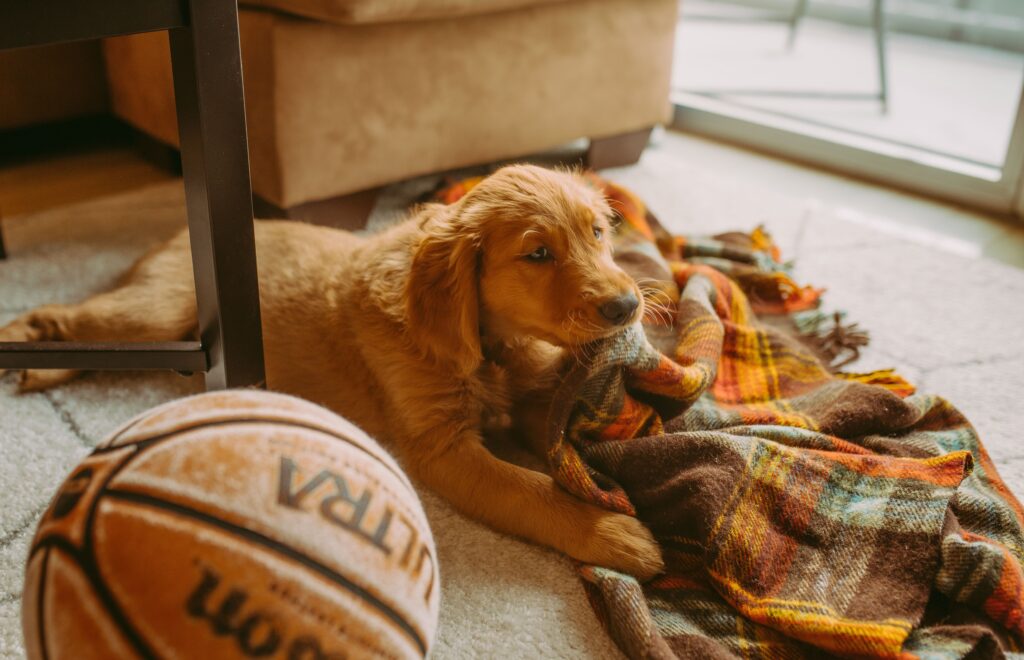
Dogs need to engage in both mental stimulation and physical exercise for optimal health. A mentally stimulated dog will typically exhibit less anxious behavior. This is especially true on days when a dog’s ability to be mentally stimulated is inhibited by weather, schedule, and environmental constraints that limit the dog’s ability to engage in outdoor activities.
Therefore, indoor games provide an effective outlet for your dog to mentally stimulate themselves, develop problem-solving abilities, and strengthen the bond you have with one another. You should not only focus on keeping your dog occupied, but also encourage them to engage their brain through thinking, observing, and making choices.
Hide and Seek Games
Hide and seek is one of the easiest and most effective indoor games to mentally stimulate your dog. This is done by utilizing your dog’s instincts to track scents and utilize both their nose and brain. This form of game offers two options for play:
Hiding yourself and having the dog find you, or hiding a favorite toy or treat in the house and allowing your dog to locate it. Begin with simple hiding places and increase difficulty as your dog’s confidence increases. Playing this game will help your dog develop their focus, recall, and scent recognition skills, as well as provide an enjoyable challenge.
Treat Searching Activities
Games based on scent are powerful forms of creating mental stimulation in your dog. Instead of giving food directly to your dog as you would normally do, you are going to hide the food in various areas in a room and allow the dog to locate it.
Begin with treats that are visible or relatively easy to find and incrementally move to more difficult to find areas (example: behind a pillow or under a chair). This form of activity stimulates your dog’s instincts to forage, therefore keeping them mentally active even in a small area.
Puzzle Toys and Food Dispensers
Puzzle toys are developed to have your dog work on problem-solving through the means of manipulating a piece of the toy to gain food or a treat from inside the toy.
Not only are puzzle toys great for those dogs that are quick eaters or bored easily, but the dog will also be required to work for their food rather than just consuming it as quickly as possible. Using different kinds of puzzle toys will also help maintain your dog’s interest.
Cup or Shell Games
The cup game is a simple game that tests the memory of your dog. You will place a treat under one of several different cups. Once you do this, you will shuffle the cups and allow the dog to choose which cup has the treat in it. Playing the cup game will help your dog develop observation, recall, and patience, which will also improve the focus of your dog.
Start slowly when beginning the cup game with your dog, and be sure the dog has an understanding of the game before increasing the size, speed, or complexity.
Obstacle Courses at Home
By creating a small, indoor obstacle course, you’ll allow your dog to combine physical movement with thought. Obstacle courses can be made from household items. Some great examples are cushions, chairs, broomsticks, and boxes; your dog should follow the path you create by going under, over, and around all of the items you have placed.
An obstacle course for your dog will improve his/her coordination, confidence, and problem-solving skills.
Name Recognition Games
Teaching your dog to find and retrieve a specific toy by name is a great way to stimulate his/her brain. For the first toy you teach your dog to retrieve, use the same name every time you play with that toy. After your dog learns to retrieve the first toy, start teaching him/her to retrieve the second toy using the same process.
Keep adding new toys and repeating this process until your dog is able to differentiate between toys by name. This game will help your dog strengthen his/her memory and cognitive ability.
Find the Person Game
The find the person game is an adaptation of hide and seek; the difference is that you will be searching for people, rather than objects. When playing, one person will hide in another room while the rest of the people remain in the same room with the dog. Once the person is hidden, you will send the dog to find the hidden person.
Playing find the person will help improve your dog’s recall and ability to track scent while also helping them bond socially with their people. If your dog is very much oriented towards people, this game will benefit them a lot.
Training-Based Games
Rather than practicing repeating the same commands, you can also create games for mental stimulation with short training sessions by mixing up the cues you use (for example: sit, stay, down, spin) and randomly presenting them, forcing your dog to remain alert and use their mental capacity while also reducing the likelihood of performing the behaviours automatically due to repetition.
The way we keep our training sessions short and varied is to keep our dogs’ interest levels high and to help alleviate boredom.
Snuffle Mats and Foraging Mats
The use of a snuffle foraging mat creates a barrier for the dog’s instinct of foraging, as you are hiding food in between layers of fabric for them to find using their nose.
In addition to slowing down the entire eating process and providing excellent mental stimulation, it is a great tool for dogs who love to sniff and explore.
Which Hand Game
This is a simple guessing game where you hide a treat in one hand and allow your dog to choose which hand has the treat in it. This game helps improve a dog’s focus and decision-making skills.
This is really basic; however, it provides great opportunities for young dogs to work on developing their attention span/engagement skills.
Stair or Level Challenges (If Safe)
If your home allows for it and if your dog is physically capable of climbing stairs or moving between floors, you can play structured games with your dog at different levels.
For example: By requiring your dog to go up, sit, come back down, or retrieve something from the second level, you are providing both mental stimulation and physical exercise.
Always put safety first, especially for older dogs and smaller dogs.
Benefits of Indoor Mental Games
Beyond being fun, mental stimulation can also be beneficial to dogs in many other ways as well. It can help reduce negative behavior, improve focus, and enhance the bond between dog and owner.
Dogs that receive mentally stimulating activities are less likely to have anxiety-related issues and are generally much easier to train.
In addition, these activities will help build a dog’s confidence and diminish feelings of anxiety or shyness.
How Often Should You Do These Games
You don’t need to spend a lot of time doing these activities in order for them to have an effect on your dog’s behavior and focus. Doing them for just ten or twenty minutes per day will help create improvements in both areas.
It is preferable to do shorter sessions on a regular basis than to do either longer sessions occasionally. Having variety within the different types of mentally stimulating activities you do with your dog is also important so that he does not get bored with them.
Conclusion
Mental stimulation through the use of indoor games is a very powerful way to help maintain a well-behaved and balanced dog. Games such as hide and seek, puzzle toys, scent tracking, and simple training aids allow owners to engage their dog’s instincts and keep the dog’s mind active.
When dogs are mentally challenged, they are less likely to engage in negative behaviors and will be calmer and more focused. Mental stimulation should not only be considered a recreational activity for your dog, but is also an important part of the overall training process, as well as providing a healthy, enriching environment for your dog, even during times of reduced outdoor activity.
By including simple indoor activities (i.e., the weird dog games mentioned above) into your dog’s daily routine, owners can help to develop better communication with their dog and subsequently improve their dog’s overall temperament.\.