
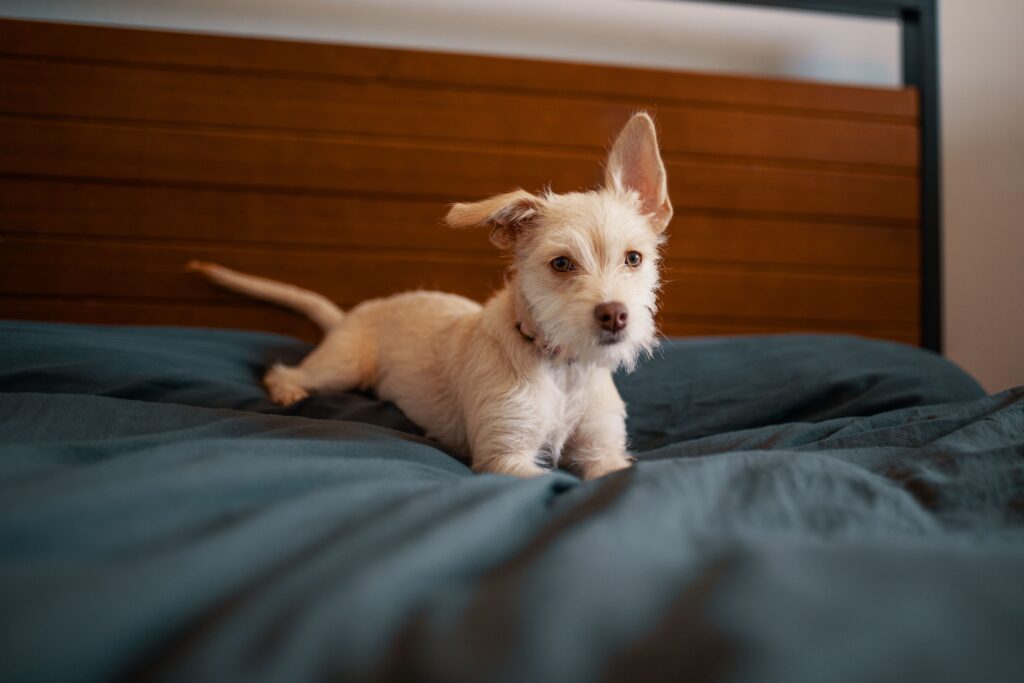
Teaching your dog to go to its bed on demand can help reduce excitement in your household and teach your dog where it is safe to rest. A well trained go to your bed can be used as part of an overall calming routine, assist with establishing boundaries during times of distraction, or serve as a consistent rest cue. The sooner you start teaching your puppy to calmly go to its bed upon request, the sooner it will develop the good habit.
Choosing the Right Bed and Location
Before training begins, choose a comfortable and defined location for your puppy to sleep on. The bed should feel soft enough to lie down upon but firm enough that it will provide a safe feeling of security for your puppy. The size is also very important; your puppy must have easy access to turn around and stretch without any problems.
Put the bed in an area where there is some quiet time but not completely remote from family activity. You want your puppy to still feel part of the family environment while learning how to settle down.
You don’t need to put the bed in the most trafficked areas of your home when starting, as these can seriously distract your puppy’s focus at this point.
Once you decide on a location for the bed, try to keep it in one spot. Consistency helps create a strong mental connection between the bed’s location and the fact that that is where they belong.
Building a Positive Association with the Bed
Begin by creating an environment where your puppy wants to go to the bed because that’s a natural desire for them. There are no commands at this point; you want your puppy to feel comfortable and curious about going to the bed.
Next, allow your puppy to find out about the bed in his own way. Place some treats, toys, or chews on the bed to entice him to jump up onto it. Praise your puppy when he does get onto the bed calmly.
You can also feed your puppy small snacks (or even full meals) in the general area of the bed. In doing this, your puppy begins to think of the bed as a good place rather than a restrictive place.
Teaching Your Puppy to Go to the Bed
Once your puppy has become accustomed to being near the bed, it’s time to introduce the specific action of lying on it.
You should be standing about a few feet away from the bed at first and encourage your puppy to go towards the bed using a treat if needed. Or you could also throw the treat onto the bed. As soon as your puppy puts their paws on the bed, give them immediate reward for doing so.
Do this a couple of times until your puppy has learned that getting up onto the bed results in good things. Now you have begun to shape the desired behavior with no verbal command yet.
Adding the Verbal Command
Once your puppy has successfully gone to their bed each time you guide them there, it’s time to add a command for that activity.
Choose one of the simplest commands such as “bed” or “go to bed,” and say it immediately prior to your puppy moving towards the bed. Gradually, your puppy will associate the word with the act of going to the bed.
Remember to repeat this procedure over and over. First, give your puppy the verbal cue, then guide them to the bed as necessary, then reward them upon reaching the bed.
Increasing Distance and Independence
As soon as your puppy learns the basic command, begin to increase how far away you are from the bed when giving the “go to” command. Try asking your puppy to go to the bed from a variety of locations around the room.
Additionally, you may be able to provide less and less physical assistance. The verbal cue for the command should be the primary guide (i.e., instead of luring with a treat each time, use the verbal cue alone and reward after they successfully go to their bed).
This will help establish your puppy’s independent ability to follow commands and recognize that the commands work regardless of where you or your puppy is positioned.
Teaching Your Puppy to Stay on the Bed
The act of going to sleep is merely one portion of this action. Once you have successfully positioned your puppy onto the bed, allow it to relax for several seconds before you reward it. Then gradually extend the amount of time you wait until your puppy understands that lying still is also an aspect of what is expected. If your puppy has gotten off the bed prematurely, simply calmly lead it back to the bed and continue with the previous steps. This phase helps reduce excitement caused by visitors and general household activity as well as promoting relaxation.
Adding Distractions Gradually
Once your puppy is consistently going to its bed, it’s now time to introduce gentle distractions. Examples of distractions may be a person walking through the area of the dog’s bedroom, soft sounds of music, TV, etc., while in the same room, or simply another member of the household moving about.
As your puppy sits calmly on his/her bed while distracted by one or all of these distractions, you have earned the right to ask your puppy to sit at his/her bed and reward him for remaining calm. This exercise will help your puppy understand the word “go to your bed” means regardless of what else is occurring in your environment.
Avoiding Common Mistakes
One of the most frequent mistakes trainers make when training their puppies is using the dog bed as a form of punishment. If you send your puppy to his or her dog bed for every infraction he commits (i.e., chewing on something he shouldn’t, jumping up, etc.), your puppy will eventually associate going to his dog bed with unpleasant consequences.
As such, even when correcting undesirable behaviors, the dog bed should be perceived by your puppy as an always safe and positive place. This means that whether your puppy has done something wrong or right, always use the same tone of voice and approach your puppy in the same manner.
Reinforcing Calm Behavior
Rewarding your puppy’s calm behavior is just as important as teaching the actual command. Anytime your puppy lies down on the bed by themselves (without you asking them to), give them quiet praise or treats for doing so. This will encourage your puppy to utilize the bed of their own free will, over time becoming a “calm zone” where they can rest, rather than an active play area.
Generalizing the Behavior
When you can consistently get your puppy to go to sleep in your house, then it is time to move on and practice in other areas of your house. Practicing in other locations will help your dog learn that “Go To Bed” has the same meaning wherever they are.
In addition, using different bedding or mats will further solidify this concept with your puppy. Your goal should be for your puppy to realize the word, not where they are. Generalizing is the process by which simple training becomes effective and predictable in everyday life.
Conclusion
Training your puppy to be able to calmly enter his/her bed on cue is an important part of establishing a stable and structured routine for you and your puppy. The ability to have your puppy remain calm when excited or going into “busy” times can greatly reduce unwanted behaviors. Providing your puppy with a designated place to rest and relax also establishes a sense of security and reduces anxiety.
By building this habit using a combination of progressive steps, positive reinforcement, clear communication, and increasing independence, you create a strong foundation upon which the ultimate goal of having your puppy willingly enter his/her bed as a result of the cue being given will occur.