
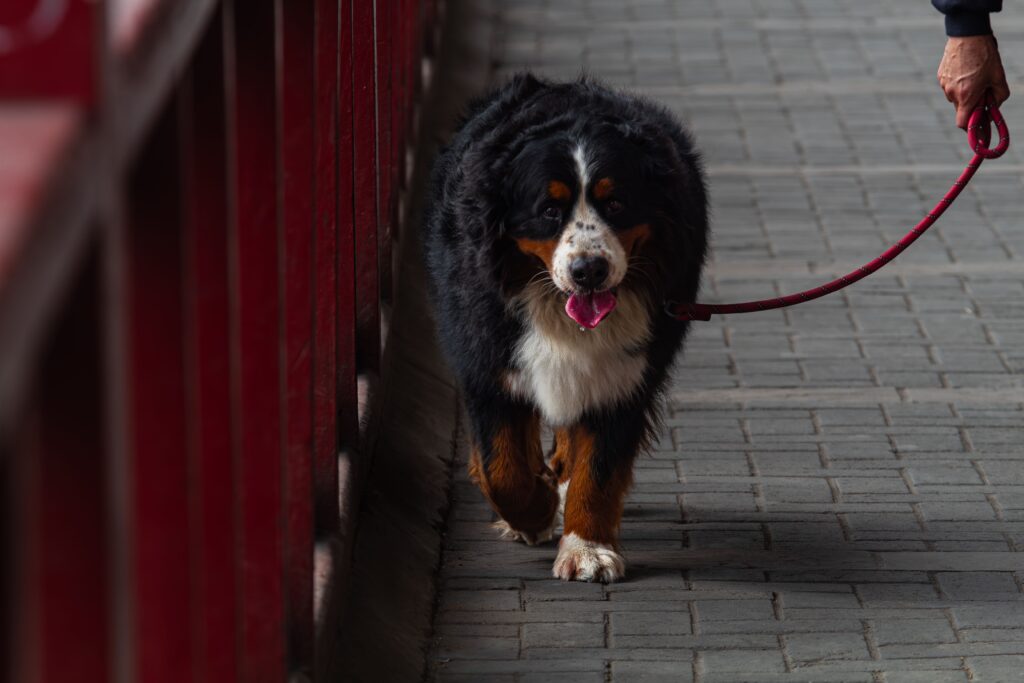
Bernese Mountain Dogs are a large breed that is known for being calm and loyal. They have striking coats that are tricolored. Originally bred in Switzerland as working farm dogs, they were used for tasks like drafting, guarding and herding. Today they are very popular as family companions because of their affectionate nature and steady personality. Despite their size, they are gentle and emotionally sensitive, and so they fit well into homes that can take care of them.
Breed Origin and History
The Bernese Mountain Dog is originally from the Swiss Alps, where it was used to help farmers complete daily chores as a multi-faceted working dog. It was expected to pull carts, herd cattle, and protect the farmer’s property.
With no heavy machinery or equipment to aid them in their work, the Bernese Mountain Dog had to be very strong and enduring. Eventually, this type of working dog evolved into a much less active role as a family pet; however, the Bernese Mountain Dog still has many working characteristics.
This explains why Bernese Mountain Dogs are often calm, confident dogs that form strong bonds with people.
Physical Characteristics
Bernese Mountain Dogs are large, muscular dogs with coats that are designed for cold weather. Their coat is usually black with rich rust and white markings, and this gives them a distinctive and refined look. They have broad chests, strong legs, and a sturdy build that reflects their working background. Their expressive eyes and gentle face expression often give them a calm and friendly look. Because of their size, they need enough space, and they are not really suited for very small living spaces.
Temperament and Personality
This breed is generally known for being gentle and very affectionate. Bernese Mountain Dogs are usually calm and friendly, and they strongly bond with their families. They usually get along well with children and show patience and tolerance.
However, they can be sensitive and do not respond well to harsh training. They are social dogs that prefer being close to their owners rather than being left by themselves for long. Strong attachment can sometimes result in behavior related to being separated if management is not handled well.
Training and Intelligence
Training a Bernese Mountain Dog is generally easy because of their high intelligence and strong desire to please. They tend to take longer to mature than some other dog breeds. The positive way you use to train your Bernese Mountain Dog is usually the most effective. Your Bernese will react poorly to negative pressure from corrections.
Establishing consistency in your training methods is crucial for success with this breed; consistency is especially important during the first few months of your puppy’s life. Basic obedience, leashes, and socializing your new puppy early on help develop confidence and also prevent undesirable behaviors that may develop as it matures.
Exercise Needs
Although Bernese Mountain Dogs do not have a lot of energy, regular daily exercise is needed so that they can remain healthy. A good amount of time spent on regular walks and some playtime will suffice for most.
They also love to spend time outside when it’s cool out. Due to the nature of their heavy coats, Bernese Mountain Dogs should avoid extreme amounts of high-intensity exercise in warm environments. Young dogs’ joints take longer to develop than older dogs’; therefore, over-exerting them is not recommended.
Grooming and Coat Care
The coat of the Bernese Mountain Dog is made up of two layers. Both have an undercoat with long guard hairs that cause it to shed heavily. This heavy shedding typically occurs during changing weather patterns.
It will be helpful to brush your Bernese Mountain Dog on a regular basis for health maintenance of the coat as well as to help control shedding within your house. Brushing the dog at least a couple of times per week will prevent matting of the hair and also help to maintain cleanliness of the coat. In addition to brushing, you will need to bathe your Bernese Mountain Dog only occasionally or as needed.
Health Concerns
Many large breed dogs have common health concerns that can be a problem. These may include hip and elbow dysplasia, cancer (certain types), and bloat. Your dog’s vet will help you monitor your dog’s health through regular visits.
Keeping your dog on a balanced diet with controlled activity levels can also keep them healthy for years to come. Because of their size and genetics, larger breed dogs tend to live shorter lives than smaller breed dogs.
Living With a Bernese Mountain Dog
This type of dog is most at ease in a home environment that allows the dog to be near family. They need ample room to roam about their home or yard; therefore, a house with a yard is ideal. In addition to needing sufficient room to roam, this type of dog will thrive better in a non-isolated environment.
Dogs of this type are very social animals that develop a high level of emotional bonding with people. Therefore, these dogs require the ability to be around other humans on a regular basis.
Feeding and Nutrition
Feeding a good quality diet that has the right amount of nutrients will help keep your dog’s joints in good shape as well as promote general health. The size of the dog is another factor when choosing a high-quality food. Large breed foods have higher amounts of protein to accommodate the larger body frame.
Portioning is very important. If you overfeed, you are at risk of creating an obese dog. An overweight dog puts excessive stress on his joints. Puppies are best fed puppy food designed specifically for large breeds. These foods are made so that they do not grow too quickly or unevenly.
Conclusion
The Bernese Mountain dog has a long work history in which it was used as a herding dog and a draft dog. It has an even temperament that makes it a good companion animal for families. They are very loyal dogs.
They do have many needs (such as grooming, training, and veterinary attention) but will be extremely faithful to their owner. This breed would make a great addition to families that have the ability to devote a lot of time to this type of animal.