
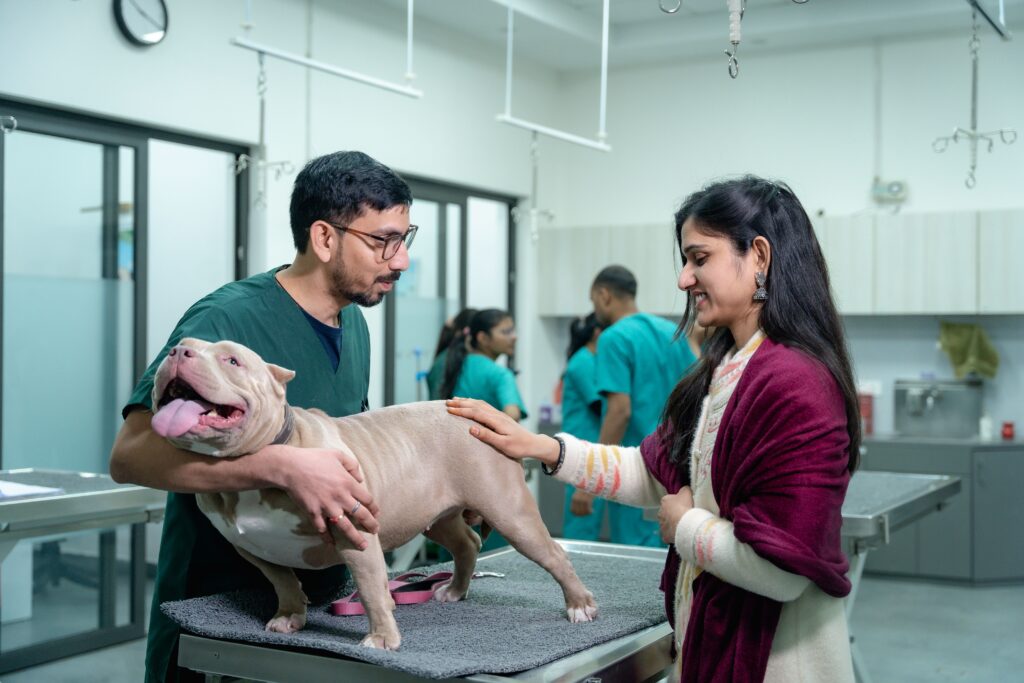
Dog health check-ups help keep your dog in top shape; however, for a lot of dogs, vet visits are extremely stressful. Dogs get stressed from all sorts of things at the vet, such as strange smells, new people handling them, previous bad experiences, etc. These types of stressors can cause some dogs to either freak out (shaking), hide, bark, resist the examination, etc. Fortunately, you can teach your dog to relax before vet visits by helping him prepare through positive reinforcement techniques and the right behavior. When you do this, it helps make his visits less stressful while improving the level of care he receives.
Start With Positive Familiarization
One of the most effective means of reducing stress associated with veterinary care is by making the animal as comfortable with the environment as possible before performing any clinical procedures. Short, positive visits to the veterinarian can be made without involving any form of treatment.
During these “happy visits”, allow your pet to roam through the waiting room, give them treats, and have them calm while interacting with staff. The happy visit will cause an emotional association to shift from one of fear to either neutral or a positive feeling towards the clinic. When animals enter the clinic in a state of relaxation, it is less likely that they will become overwhelmed when visiting the clinic for an appointment.
Practice Handling at Home
Many pets will be stressed at the vet due to the fact that they have never been handled in many of the same ways as you are attempting to do at the vet. Regular home practices could greatly improve their comfort level when it comes to the exam process.
Touch your pet’s paws, ears, mouth, and body gently regularly so that your pet becomes accustomed to being physically examined. Make sure all of your physical examinations remain low-key or calm and reward-based. This allows your pet to know what to expect from physical examination and helps them to not fight or stress about being physically examined.
Use a Calm and Consistent Routine
Dogs tend to feel safer when they understand what will happen next. A pre-vet routine of the same type for all vet visits may provide some certainty with an otherwise uncertain experience.
For example, try to maintain the same type of pattern prior to each vet visit (such as a 10-15 minute walk, a few minutes of quiet time, and a calm ride to the clinic). It is best to avoid any dramatic or energetic shifts in behavior at this time since dogs pick up on emotional cues very well.
Also, your own calmness has a great deal of influence over how your dog will react during the vet visit.
Choose the Right Time for Appointments
Selecting a veterinarian that schedules appointments during less busy hours of the day will also lower your pet’s chances of being exposed to overwhelming amounts of noise and/or being surrounded by other animals in a waiting room.”
“The less active the clinic, the fewer opportunities for your pet to be subjected to potentially triggering behaviors such as barking, jumping, etc.,” “If you suspect your dog may have an anxiety-related issue, please contact the veterinary clinic to see if they have designated quiet time slots available specifically for anxious/reactive pets.
Use Positive Reinforcement
By rewarding your pet for their good behaviors while at the vet, you are creating a link to a pleasant experience with each interaction. Give your dog his favorite treats and give them to him throughout the course of the visit, as he goes through all parts of the visit.
In addition, reward your dog for being calm in the waiting area, when being handled, and even after an examination. Over time, by linking the clinic with the rewards, you may be able to help your pet learn that the clinic is a place where they will have a positive outcome and therefore be less stressed during future visits.
Familiar Objects and Comfort Items
Using familiar things at home to create an emotional comfort zone for your pet is helpful. Your dog will find security in its favorite blankets, toys, or even clothing that has your scent on it.
When using these types of objects as a “grounding tool” in new places, they are able to provide your dog with the scent of their home. This can be especially important when trying to reduce anxiety while you’re waiting for your vet appointment.
Transport Training and Car Comfort
Many times, dogs experience stress prior to their first visit to a veterinary hospital.
If you know your pet is stressed when riding in a car, it is beneficial to address this issue as soon as possible. To begin to assist your pet in becoming comfortable riding in a car, start by taking your pet on very short, positive trips.
The goal of these trips should be to create an enjoyable experience; therefore, they should NOT have to end at the veterinarian’s office. Instead, pair the act of riding in a car with the enjoyment of going to a park or walking around. A calm ride to the animal hospital will help establish a calm environment for the rest of your visit.
Stay Calm During the Visit
Dogs closely read their owner’s emotions. If you look tense or anxious, your dog is more likely to feel that way too. During your visit, try to be very calm and steady. Speak softly and avoid hurried or nervous movements too. Your calm energy lets your dog know there is no immediate danger right now.
Work With Fearful Behavior Gradually
If dogs react strongly to veterinary experiences, gradual desensitization is needed. This means gradually exposing them to things related to the vet. This process should proceed slowly, focusing on building confidence rather than forcing them to face things directly. For more severe cases, a vet or behavior specialist can lead structured training. The aim is to rebuild trust step by step.
Avoid Negative Associations
Try not to associate your dog’s vet visits with punishment or stressors in your environment. The more of an emotional experience a dog has during a visit to the clinic, the higher their anxiety will be over time.
Therefore, try to have as many good things happen for your dogs at the same time you are taking them to the vet. In other words, if there is a good experience associated with each bad experience, then hopefully they will learn that while some parts of this place may not feel great, most of what happens here feels great.
Consider Professional Support if Needed
Some dogs suffer from extreme anxiety that does not improve just through basic training. Professionals at the vet may then recommend additional support. This can include plans to modify behavior or, in some cases, mild aids prescribed by a vet. Seeking help early can also prevent the formation of long-term patterns of stress.
Conclusion
You can reduce the amount of stress for your pet when going to see the veterinarian by making preparations and using both patience and rewarding techniques. By helping your pet to be comfortable with being handled, developing a calm routine, or creating good experiences with the veterinarians, you will find that they will have a much better experience at the vet.
Every little bit counts; whether it’s practicing in your home, providing them a peaceful trip to the vet, or gently encouraging them during the visit, your pet will learn over time that trips to the vet do not need to be an experience full of anxiety.