
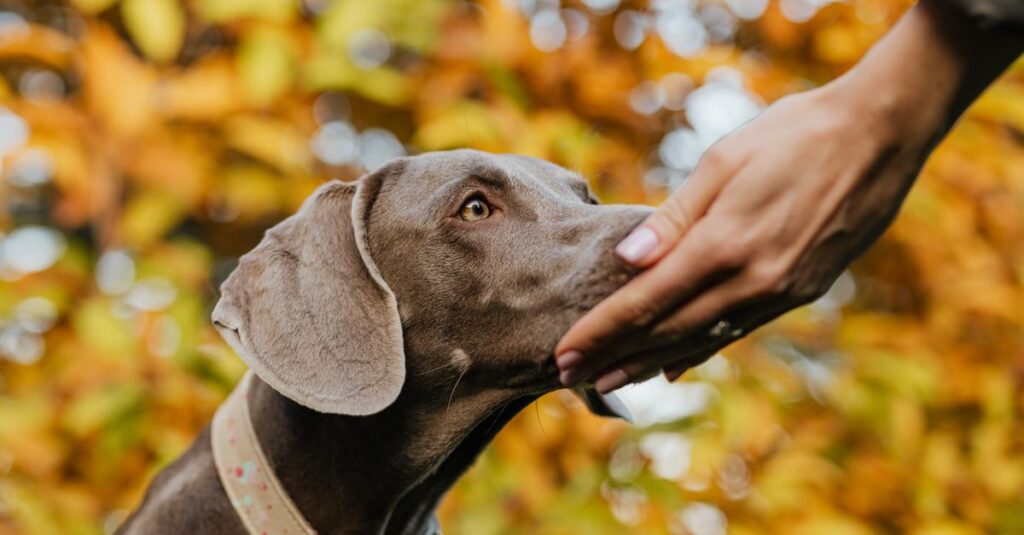
That moment when your dog turns to lick your hand, arm, or even your face while you’re petting them is one of the most typical little rituals in dog-human interaction, and it almost always signals a positive emotional experience for both of you. It shows your dog is actively participating in the interaction rather than just passively accepting your touch, licking closes a kind of communication loop between you.
Understanding where this behavior comes from can help you appreciate it for what it usually is: real affection, layered with a few instincts left over from puppyhood.
An Instinct Rooted in Puppyhood
Puppies start licking their mother’s face and mouth at a very young age, originally to stimulate her to regurgitate food, but the behavior quickly becomes associated more broadly with affection, appeasement, and social bonding within the litter. Adult dogs carry that instinct forward, redirecting it toward the people they’re bonded with, especially during calm, pleasant moments like being petted.
This is part of why licking during affection is often seen as a reciprocal gesture. If petting triggers pleasant feelings for your dog, licking back can be their way of returning that affection in the only physical vocabulary they have available.
A Response to Pleasure and Endorphins
Licking triggers the release of endorphins in dogs, contributing to feelings of calm and pleasure, similar to how petting itself is known to lower a dog’s heart rate and cortisol levels. When your dog licks you during a petting session, it may partly reflect this same physiological pleasure response, essentially an extension of the good feelings the petting is already generating.
Some dogs also lick more during petting because they’re picking up on your scent and the salt naturally present on human skin, particularly if you’ve recently been active, sweating, or eating something that left residual scent on your hands.
When Licking Signals Something Else
If licking during petting is paired with a stiff body, lip licking elsewhere, yawning, or moving away, your dog may actually be feeling mildly uncomfortable or overstimulated rather than affectionate, and the licking could be a subtle calming or appeasement signal rather than pure enjoyment. Watching your dog’s broader body language during the interaction helps clarify which is more likely.
Excessive, insistent licking that continues even when you try to redirect your dog’s attention elsewhere can occasionally reflect anxiety or a compulsive tendency rather than simple affection, especially if it shows up consistently across many different contexts, not just during pleasant petting sessions.
Should You Encourage or Discourage It?
For most dogs, licking during petting is a harmless, even endearing sign of a positive bond, and there’s no need to stop it unless it bothers you personally or poses a hygiene concern, such as licking near open wounds or a person with a compromised immune system. If you’d prefer less licking, gently redirecting your dog’s attention to a toy or a different behavior, rather than pushing them away abruptly, tends to work better and avoids sending a confusing, seemingly punitive signal during what is, for your dog, a genuinely affectionate moment.
If you’d like to actively reduce the behavior, rewarding calm, non-licking interactions during petting with continued attention, while simply pausing petting briefly when licking starts, can teach your dog an alternative way to enjoy the interaction over time.
Teaching an Alternative Greeting Behavior
If you’d like to reduce licking without discouraging affection altogether, teaching an alternative behavior, like resting their head on your lap or offering a paw, gives your dog another way to actively participate in the interaction. Reward this alternative consistently and calmly during petting sessions so it becomes the default response over time.
Patience matters here, since a well-established habit like licking during affection can take consistent redirection over several weeks to shift. Avoid punishing or reacting negatively during the transition, since a startled or negative reaction to an affectionate gesture can confuse a dog who’s genuinely trying to express closeness in the only way they know how.
How Different Dogs Express Affection Differently
Not every dog licks as their primary way of showing affection, and that’s entirely normal too. Some dogs lean their full body weight against you, others prefer to simply stay in close proximity without direct contact, and some make sustained eye contact as their main bonding behavior. Licking is simply one point on a wide spectrum of individual affectionate expression.
Getting to know your specific dog’s preferred ways of showing and receiving affection, rather than expecting every dog to behave the same way, ultimately deepens your understanding of their individual personality and strengthens your communication with them over time.
Conclusion
In the vast majority of cases, licking during petting is your dog’s way of actively returning affection, rooted in instincts that go all the way back to puppyhood. Reading the rest of your dog’s body language helps confirm whether it’s pure enjoyment or a more subtle signal worth noticing.
There’s rarely a reason to discourage it unless it bothers you personally, in which case gentle redirection works far better than a startled or negative reaction to what is, for your dog, a genuine expression of closeness.
Related Reading
why dogs lick so much in general, why dogs sit on their owners, why dogs sleep at your feet
FAQs
Is my dog licking me because she loves me?
Generally, yes, if your dog is licking you while being petted affectionately, it’s a positive sign that they feel comfortable and bonded with you.
Why does my dog lick more after exercise or a bath?
Sweat increases both the salt and scent on your skin, which can draw more licking, and the elevated excitement from physical activity can add to it too.
How do I gently stop excessive licking during cuddles?
Redirect your dog’s focus to a toy once the licking starts, or take a short break from petting and reward them for settling calmly instead.