
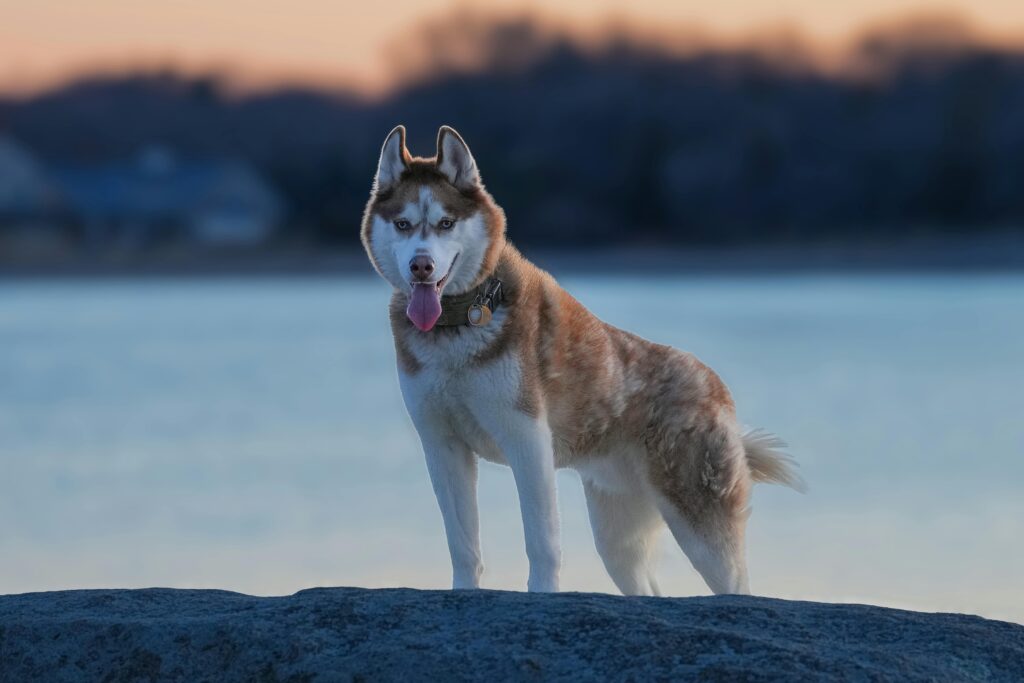
The Siberian Husky is one of the most recognizable dog breeds in the world, admired for its wolf like appearance, striking eyes and energetic personality. Originally bred as sled dogs in Siberia, Huskies are known for endurance, intelligence and their ability to thrive in cold climates.
These dogs are playful, social and highly active. While their beautiful appearance attracts many dog lovers, Siberian Huskies are also one of the more demanding breeds to own because of their exercise needs, independence and strong escape instincts. They are best suited for active owners who can provide regular physical and mental stimulation.
History and Origin
The Siberian Husky was originally from northeastern Siberia. There, the Chukchi people used these dogs as sled dogs and companions. Specifically, they were created to efficiently use energy when pulling sleds long distances through sub zero temperatures.
As working dogs, Huskies thrived in harsh arctic conditions because of their endurance and teamwork. In addition to their working capabilities, Siberian Huskies later gained fame competing in sled racing events in Alaska. Today, Huskies are often seen participating in sled sports and other outdoor activities. However, in modern times, it is common for many to keep Huskies as pets.
Appearance and Physical Characteristics
Siberian Huskies are medium sized working dogs with sturdy bodies designed for endurance and speed. They possess a thick double layer of hair (coat) on top of erect ears, a fluffy tail, and almond-shaped eyes that may range in color from blue, brown, or bi-colored (blue brown).
On average, adult Siberian Huskies typically weigh anywhere from 35-60 lbs., and reach a height of approximately 20 to 23.5 inches at the shoulder. The variety of colors of the Siberian Husky’s coat can vary greatly and may include solid colors such as black, gray, white, red, sable, and or various multi-color combinations.
Another key feature of the Siberian Husky breed is its very thick double-layered coat, which protects against extreme cold weather. Due to their nature of cleanliness, Siberian Huskies generally do not have much “dog smell” when compared to many other breeds.
Siberian Husky Temperament
Siberian huskies are outgoing, energetic dogs who tend to be very affectionate with people, and are likely to enjoy interacting socially with people and other dogs.
As compared to guard dogs (who are often protective), huskies are not typically aggressive toward strangers. As such, huskies would not typically qualify as a good example of a “guard dog.”
Like many dogs, Siberian huskies are considered to be relatively intelligent. However, like many dogs, huskies are also independent and may resist authority. Training can be difficult if you’re new to owning a dog.
Siberian huskies are also known for their tendency to vocalize. While they do bark, huskies tend to communicate by making various sounds, including howls, whines, etc. Many Husky owners consider them to be very expressive and fun pets.
Are Siberian Huskies Good Family Dogs?
While there’s no guarantee that Siberian huskies will make good family pets, for an active household with children, they could make great family pets. The dogs are playful, affectionate, and seem to thrive on social interaction with family members.
However, huskies are definitely not suitable for all families. Due to their natural high energy level combined with their strong prey instinct, huskies require constant supervision and a lot of training.
To prepare your household for the potential arrival of a Husky, you’ll want to know about Husky Needs for physical Exercise and mental stimulation, along with knowing what types of fencing you’ll want to install around your yard.
If your Husky doesn’t get enough physical Exercise or mental stimulation, they might become destructive or try to find a way out of your yard. Due to their extreme intelligence regarding escaping, huskies are well-known for finding holes in fences, digging under or between barrier fencing, and finding ways to exit your yard.
Exercise and Activity Needs
Exercising your Siberian Husky is probably one of the most critical aspects of having a Husky as a pet. This breed was originally developed to pull loads over long distances on sleds; it is natural for this breed to have a lot of endurance and energy.
For most Siberian huskies, the minimum amount of physical Exercise required each day is approximately 1-2 hours. Some huskies are more active than others and may require even more Exercise than this. Here are just a few examples of the types of activities that huskies love:
- Running
- hiking
- long walks
- pull sports (e.g., pulling a cart)
- agility courses
- interactive games
Some owners underestimate the importance of providing mental stimulation for their Huskies. When Huskies get bored, they may engage in negative behaviors. To prevent boredom, owners should use puzzle toys, obedience exercises, and structured playtime for their Huskies.
Training and Socialization
The Siberian Husky has a unique combination of traits as an intelligent breed, yet it is less likely to be obedient compared to many other breeds. A husky will typically get sidetracked by its environment, or it simply chooses whether or not it wants to follow your command. Due to this self-reliant personality type, training will need to take place through patience and consistency using positive reinforcement techniques. Socializing a young husky is key to developing confidence when interacting with people, environments, and animals.
Typically, the most successful method of training a husky is with a calm demeanor and through the use of reward-based training. Punishment (harsh) is typically not effective and will lead to mistrust from the dog. In addition to being independently driven, huskies are natural predators with high prey drives; therefore, huskies will naturally pursue small animals if not trained and supervised properly.
Grooming and Shedding
A Siberian husky has a two-layered coat that sheds extensively. Owners should expect significant amounts of loose fur throughout the house when the dog is going through a seasonal shedding cycle.
Regular brushing on a weekly basis helps to reduce loose hairs and keep the coat in good condition. When the shedding season is at its peak, owners may need to brush their dogs daily. Although huskies have a very thick coat, they tend to be clean dogs and do not need to be bathed as much as other breeds. Their coat is naturally resistant to dirt and odor.
In addition to maintaining a healthy coat, owners should also groom their huskies regularly to maintain healthy nails, ears, and teeth.
Common Health Problems
In general, Siberian Huskies are a healthy breed with average life spans ranging from 12 to 15 years. Like any breed of dog, there are potential health issues. Some common health issues include:
- Hip Dysplasia
- Cataracts
- Progressive Retinal Atrophy
- Eye Disorders
- Skin Disorders
- Zinc Deficiency
Maintaining a healthy body weight through proper nutrition and by adhering to a regular veterinarian schedule will go far in ensuring the overall health of your Husky. Due to the fact that Huskies are high-energy dogs, you must watch for signs of heat exhaustion and or dehydration in hot climates.
Diet and Nutrition
The Siberian husky needs an appropriate balance of nutrients to help meet its high energy requirements and support its development of lean muscle mass. A high-quality diet with adequate amounts of protein, fat, vitamins, and minerals will help support the maintenance of your husky’s coat and overall health.
It’s also interesting to note that huskies are more efficient at eating than most breeds, which means you’ll likely need to feed less than you would expect based on the size and activity level of your husky. Always provide fresh water; this is especially true in extreme heat and immediately after exercise.
You’ll want to closely monitor both the amount of food your husky consumes (to prevent overeating) and your husky’s body condition (to ensure your husky maintains a healthy weight and optimal energy levels).
Living With a Siberian Husky
Having a Siberian husky can be quite a thrill, lots of fun and entertainment, and sometimes very difficult. Huskies are playful, vocal, and each has their own unique personality. Active homes where there is considerable interaction and exercise are perfect places for huskies to live.
Huskies don’t like to be left alone for extended periods of time, and if they get bored or lonely, they might become destructive.
It is essential to secure all fencing due to the fact that huskies are known to be expert escape artists. In addition to jumping fences, some huskies are able to dig under fence barriers, while others can fit through small openings if allowed to do so.
Huskies have a double coat of fur that provides excellent insulation in cold temperatures. Therefore, in general, they prefer cooler environments. However, in hotter climates, providing shade, air conditioning, and close monitoring of temperature will allow them to acclimate to those areas as well.
Siberian Husky Puppies
Newborn Siberian Husky Puppies are playful, curious, and full of energy. Socializing young puppies, along with training and establishing a routine, will be essential as the puppies mature into adults with strong personalities.
Young huskies are usually curious and love to play. During the first few months of life, these puppies require consistent routines, obedience training, socialization, and toys that are safe for chewing.
During the initial stages of training, young huskies tend to be very mischievous and may try to test limits. Consistent and patient training will establish positive behavioral habits.
Properly exercising and mentally stimulating young huskies will greatly contribute to fewer undesirable behaviors as they age.
Is a Siberian Husky Right for You?
For potential owners interested in having an active lifestyle and willing to commit the time and effort needed for socialization training and exercise, Siberian Huskies are suitable companions. However, for people seeking:
- A low-energy pet,
- A dog that can easily stay by itself without becoming lost,
- Minimal shedding,
- A strong guardian instinct,
- Most importantly, low maintenance care,
The Siberian Husky may not be the best choice. On the other hand, for active owners who appreciate adventurous, intelligent, and playful animals, huskies can develop deep loyalty and become wonderful companions.
Conclusions
The Siberian Husky is an attractive, energetic, and highly intelligent breed with a long history as a working sled dog and companion animal in the Arctic regions of the world. The combination of their playful nature, striking physical characteristics, and desire for socialization makes them very appealing to dog enthusiasts worldwide.
Despite their attractive qualities, however, huskies do require significant time commitment, regular exercise, ongoing training, and diligent management to thrive as household pets. When committed owners provide the right environment and attention, Siberian Huskies can become loving, entertaining, and unforgettably memorable companions for families and individuals alike.
Related reading: Pros and Cons of Owning a Border Collie, Labrador Retriever Breed Guide, Best Dog Breeds for Families