
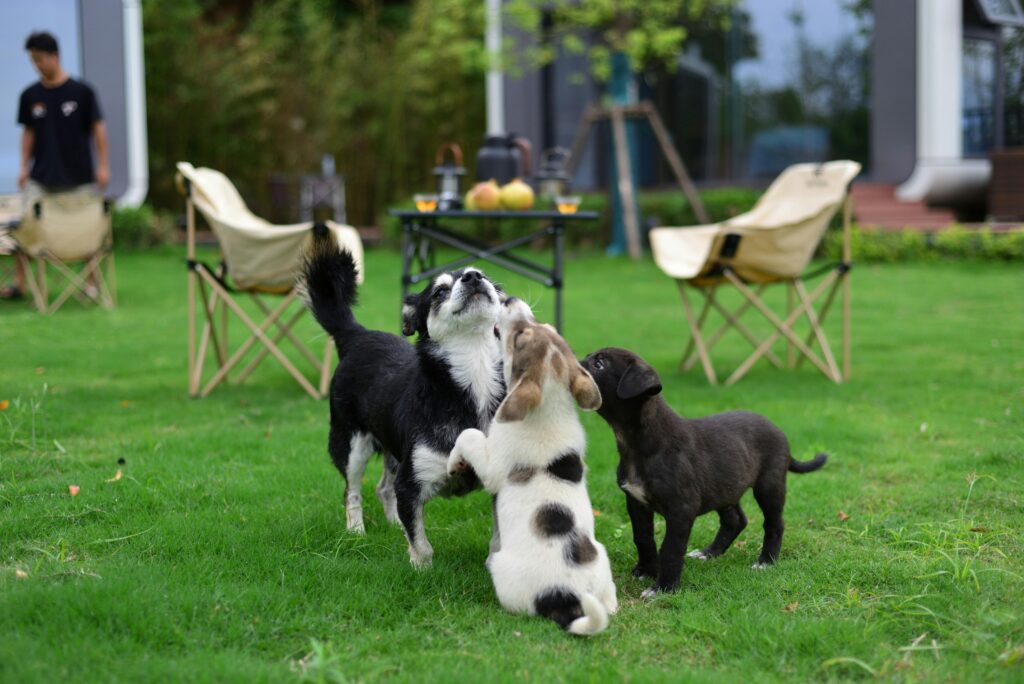
One of the greatest challenges facing new puppy owners is ensuring their Puppies will grow up to be confident, well-adjusted and well-mannered Dogs. Providing for a puppy’s basic needs, food, shelter, and attention is only the beginning. For your puppy to become a successful member of your family, he or she must be socially mature. Socialization refers to introducing your puppy to various stimuli (people, animals, environments) in a positive manner. By doing so, you are providing your puppy with the opportunity to gain knowledge and understanding of his world. As a result, your puppy becomes more confident and less likely to develop fears or anxieties.
Best Age for Puppy Socialization
Socialization begins early. From three to sixteen weeks of age, Puppies are more receptive to socialization than at any other time in their lives. During this period of rapid growth and learning, Puppies absorb information rapidly. Positive socialization experiences during this time will significantly influence how your puppy reacts to unfamiliar people, environments, and animals as an adult.
It is possible to continue to socialize your puppy beyond adolescence; however, socialization during the juvenile phase (three to sixteen weeks of age) has a greater impact on shaping your puppy’s personality and reactions to potentially frightening stimuli. Puppies that have been provided with numerous positive socialization experiences prior to six months of age are less likely to exhibit fear or anxiety toward potential sources of fear as adults. The earlier the puppy receives positive socialization experiences, the better prepared he/she will be to handle new situations as an adult.
Socialization should occur slowly and positively. Puppies should never be subjected to overwhelming or traumatic socialization experiences. Instead, socialization should progress slowly and positively. As a general rule, Puppies should not experience anything they find scary or painful. If a situation causes the puppy undue stress, then it is too soon to expose him/her to that particular stimulus. The primary objective of socialization is to enable the puppy to recognize and respond appropriately to its environment.
Benefits of Proper Socialization
Socialization has significant implications for both the physical and mental health of your puppy. Socialization contributes to building a sense of balance, adaptability, and overall ease in managing daily routines for your puppy.
Reduces fear and anxiety
As previously mentioned, Puppies that have received positive socialization experiences are less likely to develop fears of unfamiliar individuals, sounds, or environments. Through socialization, Puppies acquire knowledge regarding what constitutes “normal” behavior for themselves and others. Consequently, socialized Puppies tend to exhibit reduced stress responses during encounters involving unusual people, sounds, or environments.
Better Confidence
Generally speaking, Puppies that are confident are typically calmer. Confident Puppies are also more apt to calmly encounter novel situations whereas less confident Puppies may become panicked. Furthermore, confident Puppies will also be more able to recover quickly from unforeseen events or sudden changes in routine.
Improved Behavior Around People and Pets
Typically, well-socialized Puppies are generally more amiable and more comfortable around children, guests, and other animals. Well-socialized Puppies will learn acceptable forms of communication and social etiquette at an early age which will decrease the likelihood of aggression or extreme fearfulness towards unfamiliar Dogs and humans.
How to Socialize a Puppy Safely
In addition to exposing your puppy to people, animals, sounds, environments and experiences, socialization should take place safely and positively. The purpose of socialization is not merely to expose your puppy to every conceivable object or individual. Rather, the intention behind socialization is to facilitate enjoyable experiences that promote trust and confidence in your puppy.
Meeting new people
When allowing your puppy to meet new people (men/women/children), ensure that there are individuals of varying ages, hair styles, sunglasses, uniforms, bags, etc. Encourage calm Interactions between your puppy and the new person. Allow your puppy to approach the individual(s) at its own comfort level. Reward desired behavior with treats, praise, and playtime. Avoid pushing your puppy to engage with someone who seems uncomfortable or nervous.
Meetings with other Dogs
Socializing with familiar, friendly and vaccinated dogs will teach your puppy proper social behavior and canine communication. Begin with calm and well-tempered Dogs that are known to gently interact with Puppies.
Monitor body language closely. Playful interaction should involve relaxed movements and short breaks between Interactions.
If vaccine schedules are incomplete or the environment seems too hectic or distracting, consider avoiding the dog park during early socialization.
Exposure to Sounds and Environments
Expose your puppy to typical household sounds/environments. Gradually introduce each type of noise/appliance etc., at low volume.
Gradually take your puppy to diverse safe locations (parks, strolls, walks, pet-friendly shops or outdoor cafes). Exposure to bicycles, traffic, elevators or crowds will assist in teaching your puppy how to adjust to busy settings.
Ensure all experiences remain positive by using rewards and maintaining a peaceful atmosphere.
Car Rides and Public Places
Briefer automobile rides can help acclimate your puppy to traveling. Initiate short trips. Reward calm demeanor before/after the trip.
Traveling with your puppy provides additional exposure to visual, spatial, audio or motion stimuli. Young Puppies should be carried safely while unvaccinated. The purpose is not to overwhelm the puppy but instead to encourage familiarity/confidence through time.
Socialization Checklist for Puppies
Develop a comprehensive plan for socialization that incorporates multiple types of safe exposures. The more positive exposure your puppy receives, the more adaptable he will become:
Different Surfaces
Provide your puppy opportunities to walk on various surfaces:
- Garden grass
- Tiled floors
- Carpets
- Sandy terrain
- Gravel
- Wooden surfaces
- Metal grating
Help build confidence and coordination in your puppy.
Household Noises
Gradually introduce common household sounds:
- Vacuum cleaner
- Wash machine
- Dryer/hair dryer
- Doorbell, kitchen appliance and thunderstorm recording
Veterinary Visits
Both initial and subsequent visits to veterinarians are beneficial for socialization purposes. Familiarity with handling/examinations during early years will help alleviate future veterinary-related fears.
Grooming Experiences
All Dogs require regular grooming regardless of breed length/texture. Establish early exposure to brushing, nail trimming, bathing, gentle touch and handling. Regular ear, paw, tail or mouth touching will prepare your puppy for future grooming sessions.
Signs of Poor Socialization
Puppies that did not receive adequate socialization may develop behavioral problems that persist into adulthood.
Fearfulness
Puppies that were not adequately socialized may exhibit apparent fear when encountering unknown people, objects, or environments. They may withdraw, hide, shake, tremble, or avoid interacting.
Aggression
Fearful behavior can occasionally escalate into aggressive defensive behavior. Aggressive behavior can be exhibited by Dogs that are afraid of strange animals, becoming overly protective of resources. When feeling threatened, some Dogs may exhibit barking, snapping, or growling when approached by strange animals.
Increased barking
Some poorly socialized Dogs may display excessive reactions or responses due to anxiety in response to ordinary circumstances.
Anxiety in New Environments
Many poorly socialized Dogs will have difficulty adapting to travel, walks, appointments or busy locations. Many poorly socialized Dogs become overwhelmed by new surroundings and demonstrate overt stress behaviors.
Common Socialization Mistakes
As stated earlier, socialization is very important, but unfortunately, many errors can be made during this process that could ultimately produce undesirable outcomes.
Overwhelming the Puppy
Young Puppies have limited capacity for processing large amounts of environmental stimulation. Overexposure experiences within a single session can lead to fear or stress in young Puppies. Limit socialization sessions to reasonable times. Provide a variety of pleasant/distractions within each session. Avoid exposing your young puppy to large groups/small children, noisy spaces, etc.
Forcing Interactions
Never force a young puppy to interact with anyone’s personalities, dogs or people, etc. If your puppy appears uneasy or uncomfortable, do not push them further than their limits. Trust is established based on voluntary participation.
Skipping Positive Reinforcement
Regardless of whether you’re seeking professional assistance or attempting self-help training techniques, rewarding good behavior is crucial for establishing trust/confidence with your puppy. Rewarding desired behavior creates a positive association with new experiences, thus encouraging repeated exploration/adoption of new stimuli.
Socialization Activities and Games
Having fun when doing puppy socialization makes it an enjoyable experience for both owner and puppy. The added benefit is that socialization will assist in building confidence and essential life skills.
Puppy Classes
Structured puppy classes are an excellent method of allowing for safe socialization as well as an opportunity to introduce puppy owners to basic training techniques. In these structured settings, puppies can develop their understanding of obedience, focus and communication. Structured classes are also an opportunity for puppy owners to gain a better understanding of puppy behaviors and body language.
Playdates
Playdates with other dogs (especially those with good temperament) provides a relaxed atmosphere in which puppies can apply what they have learned regarding socialization. Playdates also teach supervised play on boundaries and communication.
Select dogs to participate in the playdate based upon their level of calmness/energy.
Exercises to Build Confidence
Simple games and exercises can improve confidence, including:
- Walking through tunnels
- Exploring new objects
- Climbing small obstacles
- Learning basic commands
- Reward-based training games
Helps create a more adaptable and emotionally stable puppy by utilizing positive exposure with reinforcement.
Conclusion
One of the best things you can do for your puppy’s future is invest money into proper puppy socialization. Positive early experiences will result in a calm, confident and well-mannered adult dog.
Socializing puppies is NOT about throwing them into every situation at once. Socialization should be done slowly in a controlled manner with fun experiences that build trust and confidence from the start.
By introducing puppies to new people, environments, sounds, and animals in a positive way, owners can greatly reduce the risk of fear, anxiety, and behavioral problems later in life.
Well-socialized puppies tend to be better companions, able to navigate the typical day-to-day occurrences with ease and live a less stressful/happier life.
Related reading: Best Age to Start Puppy Training, How to Train Multiple Puppies at the Same Time, Common Dog Owner Mistakes