
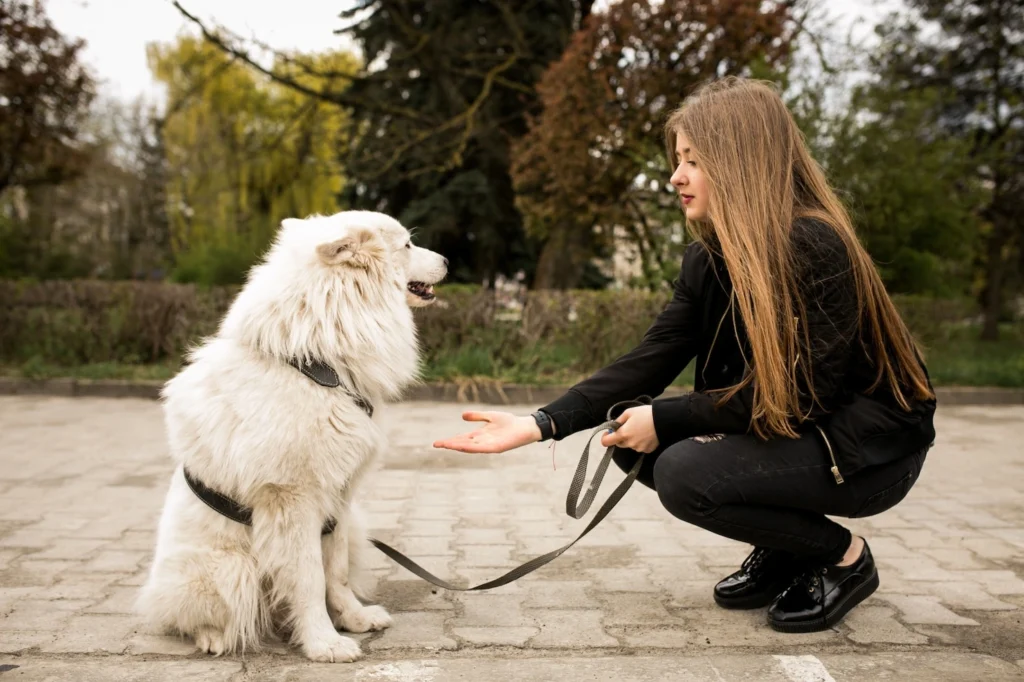
Leash pulling is common among puppies because they become excited by new places, smells, and experiences during walks. Puppies naturally want to move quickly toward interesting things around them without understanding proper walking behavior. Pulling usually becomes stronger if it accidentally helps the puppy reach desired places faster. Understanding why this behavior happens is important before beginning training. Owners should remember that leash skills require time and practice to develop successfully. Patient training and regular guidance help puppies understand expectations and learn calmer walking habits during outdoor activities and daily exercise sessions.
Teaching Loose Leash Walking
Teaching loose leash walking starts in quiet environments where there are fewer distractions. Hold the leash comfortably and stop moving whenever your puppy begins pulling ahead. Continue walking only after the leash becomes relaxed again. This method teaches your puppy that pulling does not help them move forward. Reward your puppy with praise or treats whenever they walk calmly beside you. Short training sessions often work better because puppies have limited attention spans. Regular practice builds understanding and strengthens communication between owners and puppies while making walks more enjoyable and controlled.
Staying Consistent During Training
Consistency plays a major role in successful leash training because puppies learn through repetition and routine. Everyone walking the puppy should follow the same training methods to avoid confusion. Sudden changes in rules may slow progress and create mixed signals for your puppy. Daily exercise also helps reduce excessive excitement and improves focus during walks. Training in different environments gradually builds confidence and strengthens learned behavior. Small improvements should always be encouraged because learning takes time. Consistent effort eventually creates calm walking habits and improves overall behavior during outdoor activities.