
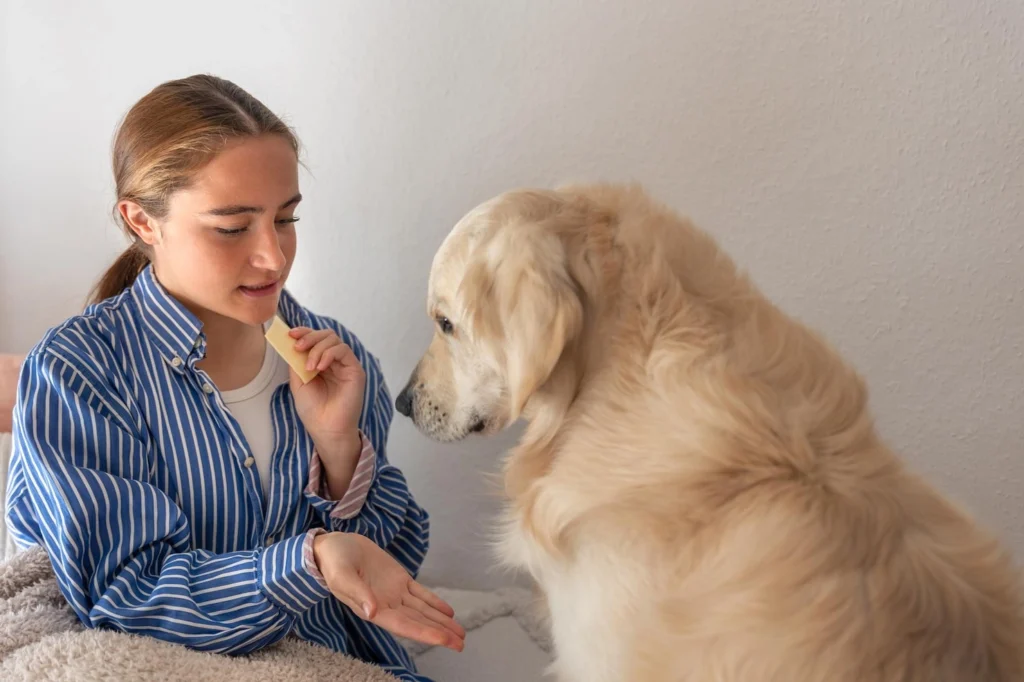
Puppies naturally bite and mouth objects because they use their mouths to explore their surroundings. Teething can also increase biting behavior because chewing helps relieve discomfort in their gums. Understanding this behavior helps owners respond appropriately during training sessions. Young puppies often do not realize that their bites can become painful for people. Learning proper bite control takes time and practice. Owners should remember that biting does not usually mean aggression during early development stages. Recognizing the reason behind the behavior makes it easier to teach puppies better habits and encourage safe interactions with family members and visitors.
Redirecting Their Attention
Redirecting attention is one of the most effective methods for reducing unwanted biting habits. Whenever your puppy starts biting hands or clothing, calmly replace your hand with a chew toy or another safe object. This teaches your puppy what is acceptable to bite and chew. Interactive toys can keep puppies mentally stimulated and reduce boredom throughout the day. Puppies often bite more when they have excess energy or become overly excited during play sessions. Consistent redirection helps them understand boundaries while still allowing natural chewing behavior to continue in healthy and appropriate ways.
Encouraging Gentle Behavior
Teaching gentle behavior requires patience and consistent responses from everyone in the household. If your puppy bites too hard during play, stop interacting for a few moments and ignore the behavior briefly. This teaches your puppy that rough play ends enjoyable activities. Reward calm and gentle interactions with praise and treats whenever possible. Puppies learn quickly when they understand which actions bring positive attention and rewards. Avoid yelling or physical punishment because it may create fear and confusion. With regular training and positive guidance, puppies gradually learn better manners and safer ways to interact with people.