
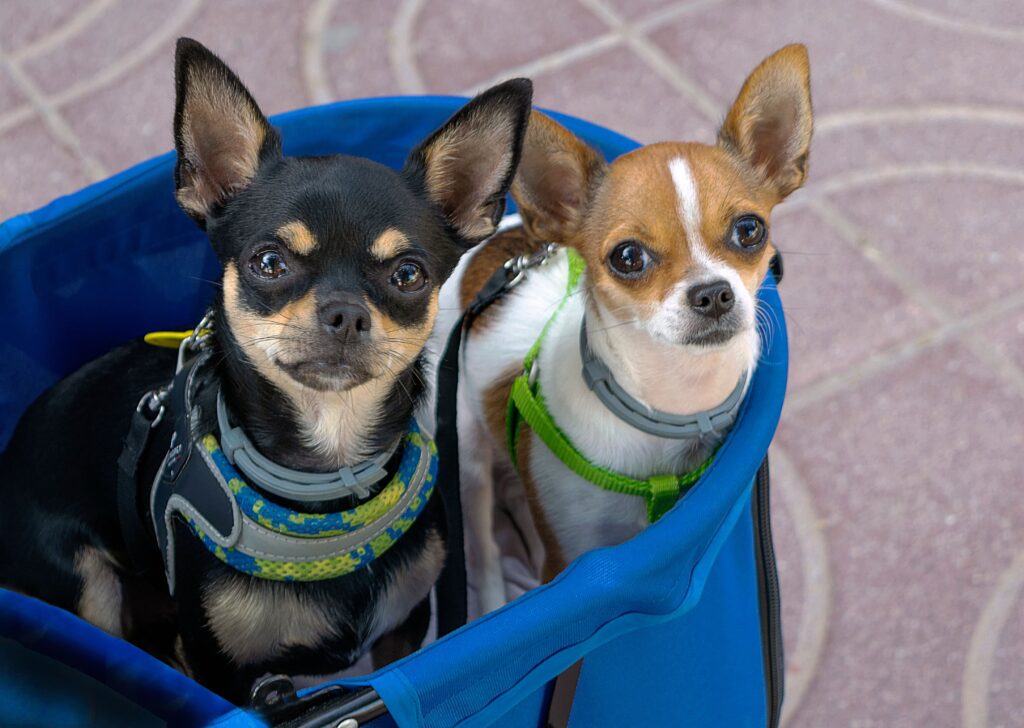
Early puppy training includes getting a puppy used to using a carrier. A carrier is very helpful in many ways when you are traveling with your dog, taking him to the veterinarian, or having him groomed. Puppies often do not like entering a carrier initially because they feel that being in one means they will be separated from family members or confined.
However, if you follow a systematic procedure to allow your puppy to get into a carrier without feeling anxious about the process, then the carrier should become as comfortable (and therefore as secure) a place for your puppy to relax as his bed.
Choosing the Right Carrier
Selecting the right carrier for your puppy is the first step to successfully house training your new pet. The ideal size of the carrier will allow your puppy to stand up, turn around, and lie down comfortably in it. On the other hand, the space should not be too large, as this may make your puppy feel less secure than normally.
Soft-sided carriers are generally more comfortable for puppies than hard carriers, but hard carriers offer structural durability that soft-sided carriers do not.
The ventilation within the carrier must also be considered. Well-ventilated carriers help to keep your puppy calm when used longer than usual and prevent overheating.
Introducing the Carrier as a Neutral Object
Allow your puppy to simply observe the carrier in a comfortable area for them. Leave the carrier door open in an area your puppy spends their time on a regular basis. Do NOT try to encourage them to interact with the crate at this point.
Allow your puppy to interact with the crate as they see fit. Depending on the dog’s personality, some will be interested in the crate right away (sniffing), and some will take longer to even notice it. Both reactions can occur.
Building Positive Associations
Begin to create a connection for your puppy that the crate has positive associations. Place treats or toys in front of the opening to make going into the crate an exciting experience. When you see your puppy step inside, no matter how long they stay, be sure to calmly reward them. This will help them understand that being close to or inside the crate means something positive is happening.
Encouraging Voluntary Entry
You will now be able to encourage your puppy into their carrier after your puppy has become comfortable with the presence of their carrier.
As you would for all new objects, you may want to encourage your puppy to explore the interior of the carrier by placing a treat inside of the carrier, or a favorite toy close to the rear. Once your puppy enters the carrier, let them remain until they have finished exploring.
Do NOT yet close the carrier door. The objective at this time is to establish a sense of safety and security for your puppy, so that when they do eventually go into the carrier, they will not feel confined.
Introducing Short Closures
Beginning with the time when your puppy will be able to enter the carrier without showing extreme anxiety or fear, you may begin closing the door on the carrier for short periods of time.
While in proximity, slowly shut the door for a few seconds. Open the door before your puppy appears anxious. As your puppy grows calmer, increase how long you leave the door closed.
The importance of keeping things slow cannot be stressed enough. If your puppy begins displaying stress, decrease the amount of time and go back to an earlier step.
This next phase teaches your puppy that they are going to be in the carrier temporarily and safely.
Building Calm Behavior Inside the Carrier
As your pup gets used to being in the crate, you’ll want to reinforce quiet time at home when they are in the crate. Reward them for quietly sitting or lying down. Do not excitedly interact with them. Your purpose here is to relax your puppy and not engage in play. Add a few of their favorite toys or blankets to the crate.
Extending Time Gradually
Beginning once your puppy has become calm in response to brief closures of the crate, now is when you should start expanding how long your puppy will be confined to the crate. The first period of confinement to the crate would be for just a few minutes at a time. Once your puppy becomes comfortable with that amount of time, you could expand it.
You are required to stay near your puppy during these early sessions so they feel safe. Gradually over time, you may remove yourself from proximity to your puppy yet still expect them to exhibit calm behavior.
At any point, if your puppy starts whining or exhibits other signs of stress, simply shorten the duration slightly, and you may also slow down progression.
Practicing Movement with the Carrier
After your puppy is comfortable with being in the house, you can begin to add gentle movements. To start, pick the carrier up off the ground for just a few seconds before putting it back down. This will allow your puppy to become accustomed to moving while still feeling safe within their carrier. Once your puppy becomes very comfortable with movement, you may then transition into taking them on a short car ride or even allowing them to go outside while in their carrier.
Avoiding Negative Associations
One of the most common errors people make is to utilize the carrier only when you have an event that will be stressful, such as a visit to the vet. The result of utilizing the carrier only during stressful events is that your puppy associates the carrier with being anxious.
You need to use the carrier in positive scenarios too. Give your puppy treats while they are in the carrier. Have them lie down in the carrier at home. Help your puppy relax in the carrier without any other stressed-out circumstances.
Reinforcing Calm Behavior
Reinforce all of your puppy’s calm behaviors within the confines of a crate by providing her quietly and calmly with praise or treats.
Over-enthusiasm from you may cause your puppy to break out of their calm state. Your goal should be for your puppy to have such a strong association of calmness while they are in the crate that being in the crate feels normal and good.
In time, your puppy will begin to settle into the crate on their own.
Troubleshooting Resistance
Do not use force to get your puppy to enter a crate. Using force could lead to an increased amount of fear from your puppy and ultimately, slow down the training process.
Go back through the steps to positively associate the crate again.
Add items that your puppy has a positive association with (i.e., scent, toy, or treat) to the crate.
Conclusion
Teaching your puppy to be at ease in a crate requires time, practice, and an incremental build-up of comfort with being confined. It is not about placing your puppy into the crate against their will but developing a sense of security and routine with the crate. With proper introduction, the crate is developed as a source of comfort rather than stress.
Building associations that are positive, allowing your puppy to enter voluntarily, and increasing duration and motion within the crate helps develop a feeling of security for your puppy while in the crate. Ultimately, by making your puppy comfortable in a crate, it reduces both your dog’s anxiety as well as your own when traveling, taking them to the vet, or going on trips.