
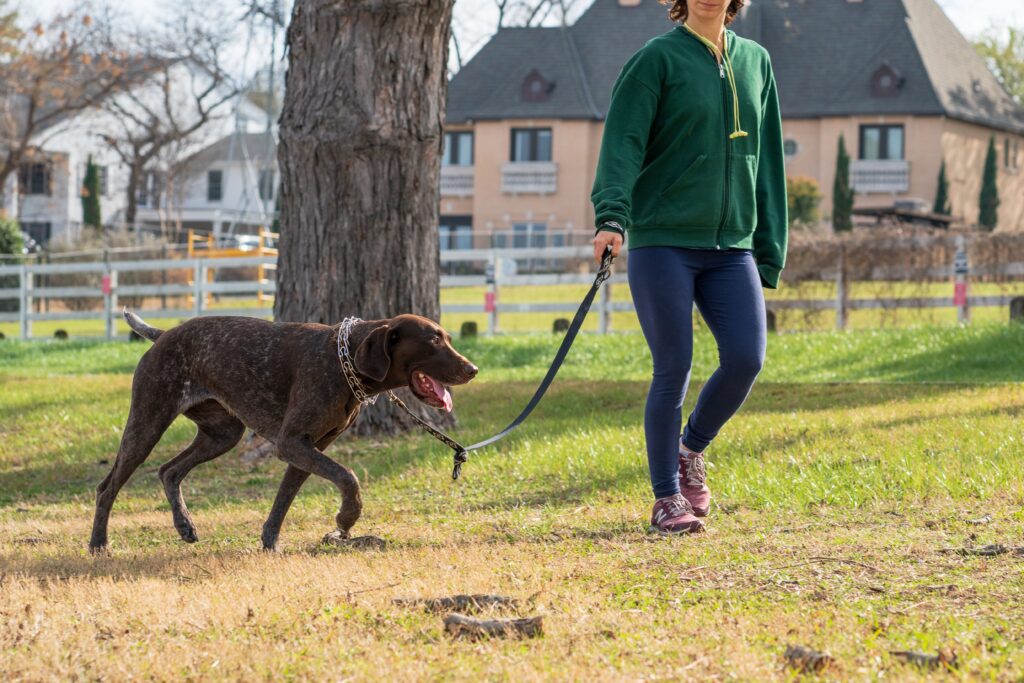
Training dogs can be an incredibly challenging task to accomplish if you don’t remain consistent when doing it. Unfortunately, many trainers or dog owners use a wide variety of methods, including using different types of treats, teaching different commands, and using various techniques; however, almost all miss the point that dogs need clear repetition and a predictable pattern to learn new behaviors.
Without consistency within their training program, dogs become confused regarding what they have been trained to do. With consistency, even with simple commands, you will start to see very strong, reliable behavior develop over time. Generally speaking, the difference between a well-behaved dog and an unruly dog is not breed or intelligence but rather is related to how consistent an owner has been in training their dog.
How Dogs Learn Through Repetition
Unlike humans, dogs do not learn how to communicate using verbal language; dogs learn through associating actions with an outcome and through repetition. When a particular action consistently produces the same response from you (for example, when sitting receives praise), you provide your dog with the tools to associate both actions together as being a good thing.
If at times you praise your pet for sitting and at other times you don’t, your pet will ultimately become confused and will likely no longer sit when you request them to. Through consistency, you will provide your dog with a stable mental pattern that will help them create reliable habits.
Preventing Confusion in Commands
Confusion arises because a dog utilizes a variety of cues, including tone of voice, body language, timing, and command, to determine how they will respond to what was requested. When you utilize different commands to signify to your pet to perform the same action, or if you use the same command to mean different things depending on how you feel or to whom you are speaking at the time, your pet will become confused.
Take, for example, the command “down.” If you ask your dog to “down” and it means lie down only half of the time you use it, your dog will likely be hesitant to do what you are requesting of them.
By providing consistent cues, you will ultimately remove confusion and create clarity within what your pet is expected to do.
Building Strong Habits
When you train a dog, you are not teaching them just commands, but creating reliable habits that will eventually become automatic for your pet. A habit is formed when an action occurs consistently in the same situation with the same outcome.
Once you create a habit, your pet will no longer need to think through the command every time you ask. If you are using inconsistent patterns, this will slow down how quickly reliable habits are created. If you provide consistent patterns, you will develop reliable habits for your dog at a much faster rate than if you use infrequent or inconsistent patterns.
Therefore, you must consistently train each day, for at least a short time, rather than waiting several days or longer (before you train) and train for an extended amount of time once.
Reinforcing Desired Behavior
Constantly reinforcing (rewarding) behaviour teaches a dog how to behave, but if you reward the same behaviour at one time and do not reward it at another time, then the dog will question whether or not that behaviour is acceptable.
To have a dog understand exactly what behaviours you consider valuable, you need to reinforce your dog in a consistent manner.
That does not mean you should reward every behaviour for the rest of your dog’s life, but rather that you should consistently and predictably reinforce behaviours during your dog’s training phase.
Reducing Behavioral Problems
The majority of the problem behaviours we encounter with our dog stem from our inability to establish consistent boundaries.
For instance, when you let your dog jump up sometimes but also yell at him sometimes, then your dog will never learn what the correct behaviour is regarding jumping; therefore, your dog learns that sometimes jumping is an acceptable behaviour.
Strengthening the Human-Dog Relationship
Your dog feels more secure when you are consistent in your expectations of him. Consistent boundaries provide predictable consequences for your dog, which results in building trust.
A dog that knows how you will respond in a situation will be more confident than a dog that is unsure how you will respond, which creates a stronger dog-owner bond.
Due to inconsistent methods of handling your dog, your dog’s uncertainty will create stress, due to not being able to predict how you will react.
Improving Training Speed and Results
Training dogs consistently provides faster learning. Learning occurs through repeating the same command, using the same reward, and achieving the same result in the same way; thus, it will be easier for a dog to learn new behaviours and remember them longer.
If dogs receive inconsistent training, then they are more likely to be corrected multiple times to learn the same behaviour in different ways.
This is why training sessions on a consistent weekly basis will provide better results than sessions that are held at irregular intervals.
Importance of Household Consistency
Not only does everyone in the home have to be consistent, but there has to be consistency with all family members.
When all family members use different rules or commands, the dog is receiving mixed messages, and regardless of one person training properly, it can undo all the progress. Just getting everyone in the household to use the same commands, expectations, and reinforcement methods will yield much better results than having different family members use different commands.
Emotional Stability in Dogs
Dogs benefit from living in an environment in which they can anticipate what will happen next. Consistent routines lower anxiety, which increases the dog’s emotional stability.
When a dog knows what to expect when fed, walked, trained, and rested, they are less likely to be stressed or reactive.
A dog that has inconsistent routines will usually become confused, frustrated, or show attention-seeking behaviours.
Common Mistakes That Break Consistency
Some of the common mistakes that can break Bamboo’s consistency include
- Frequently changing commands
- Inconsistent rewarding of behaviours
- Allowing rules to change with the member’s mood
- Different family members using different signals
- Skipping training for long periods of time
These types of minor inconsistencies will have a major impact on recovery time.
How to Maintain Consistency
Consistency is not overly difficult to maintain; it simply requires discipline in your routine and communication.
By using the same command words, practising at the same time, and reinforcing behaviour clearly, you will develop strong patterns of learning for your dog.
Short, regular training sessions, rather than long sessions that may be inconsistent and unpredictable, can provide the most benefit to your dog.
Conclusion
Consistency is essential to any effective dog training program. Consistency aids dogs with the ability to understand commands in order to create reliable commands and build emotional security.
Without consistency in training programs, the owner is sending mixed signals to their dog and making it difficult for the dog to learn, even when implementing correct training principles.
When a dog receives consistent rules, timing, and reinforcement throughout its training, it will develop quicker learning rates and exhibit more predictable behaviours, leading to increased levels of reliability between the dog and its owner.
In essence, consistency creates a uniform communication method that dogs completely understand and will gladly follow.