
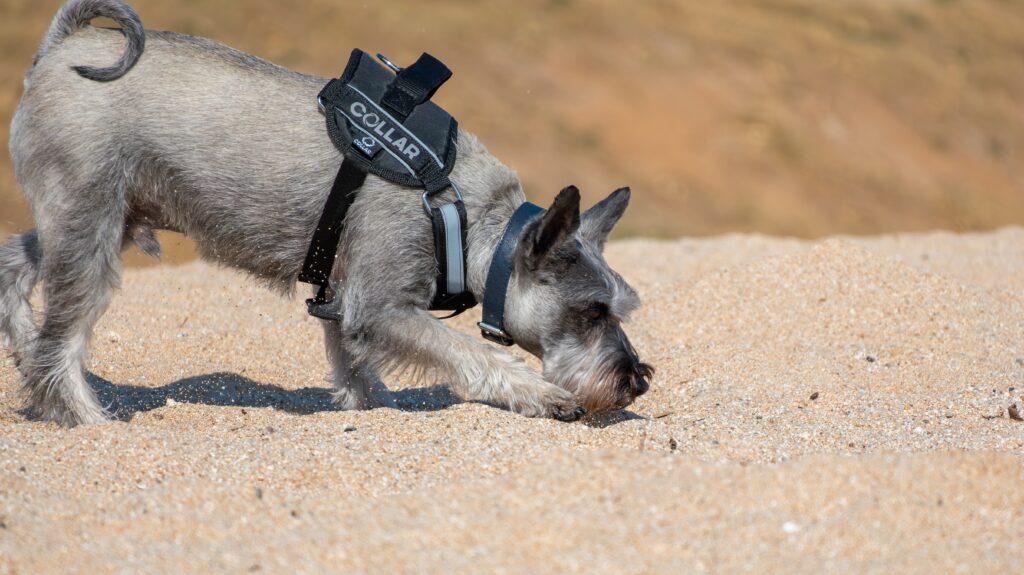
Sniffing is an activity that many people think of as nothing but an animal’s instinctual behavior. In fact, however, sniffing is a vital part of how dogs collect data and gather information about their surroundings. To put it another way, when we walk our dogs and they are constantly stopping to sniff at the ground, a wall, or some other object, we may find this pattern to be tedious and monotonous. However, from the dog’s perspective, these pauses are allowing them to obtain vast amounts of information about their environment. Dogs rely primarily on smell to identify and understand what is going on around them. So while humans use sight to see the world and its elements, dogs depend upon scent to read their environments.
Smell Is a Dog’s Primary Sense
Dogs process the world primarily through their nose. Their sense of smell is much more acute than ours, and they can detect and interpret very low concentrations of smells. When your dog walks and sniffs along the way, they are processing information about other dogs, people, food, and changes in the environment.
Each sniff gives them a kind of recent update about recent happenings in that area. Walking without sniffing would be like reading a book where most of the words have been taken out for a dog.
Scent Marking and Communication
One of the main reasons dogs sniff so much is communication. Other dogs leave behind scent marks through urine, feces, and even skin oils. These scents carry detailed information.
By sniffing, your dog can learn:
- Which animals passed by
- Their gender and health status
- Their emotional state
- How recently they were there
This is a form of non-verbal communication that is essential in the canine world. It allows dogs to understand their environment in a way humans cannot fully perceive.
Environmental Exploration and Mental Stimulation
Sniffing on your walk is an example of another way to engage your dog’s brain through exercise. Since every smell that you encounter will generate excitement about what it might be, your dog will have fun learning and exercising his brain during your walks.
The walks we take our dogs on are not simply a means of allowing them to get some physical exercise. Walks provide mental experiences for them as well by providing a constant stream of information that they must process.
Mental activity can be as valuable a type of exercise, if not more so than physical activity, especially for smart or high-energy breeds.
Stress Relief and Emotional Regulation
Allowing your dog to sniff during walks helps your dog feel calm. Dogs that are anxious or excited benefit from being able to focus on smells. In addition, this is one reason dogs tend to sniff more when they are in unfamiliar areas such as new neighborhoods or during walk times through congested streets. This allows for familiarity and grounding for the dog. Often, it will be beneficial to allow the sniffing of your dog to sniff so he has less anxiety and therefore better behavior while walking.
Curiosity and Habitual Behavior
Dogs may sniff everything for no other reason than curiosity. The process of active exploration of their surroundings through smell is much more common in puppies and younger dogs.
Sniffing can also be an activity that becomes habitual while a dog walks. As long as a dog can freely search their environment at all times, this will remain one of their habits of choice. This type of behavior should never be viewed as wrong or unnecessary for the canine. To them, it’s just the way they interact with the world around them.
Breed Differences in Sniffing Behavior
Certain breeds have a tendency to be more scent-oriented than others. Hunting/Tracking breeds (and some others) will typically exhibit stronger sniffing behaviors, as this was an historical requirement of their breeding purpose.
That being said, many other breeds may still “sniff” very regularly; however, they may do so at lower intensities. As with most traits of individual dogs, individual personalities play a significant role in determining the degree of sniffing that occurs. In general, some dogs are simply more curious/exploratory by nature while others are focused on movement.
Why Some Walks Feel “Slow”
From our own point of view, we may find the multiple stops along a walk to be inefficient; however, from a canine’s point of view, this is not about efficiency in terms of distance or speed. For dogs, the focus of their walks will be on acquiring knowledge and information.
For example, if you have taken your dog out for a brief walk with lots of time to sniff around, they are likely to derive a greater sense of satisfaction from that experience compared to an extended walk without opportunities to gather new information. In essence, dogs require both physical activity and mental stimulation as part of their overall well-being. Therefore, what seems so slow to us is truly a complete sensory experience for them.
When Sniffing Becomes Excessive
In most cases, sniffing is completely normal. However, there are situations where it may increase suddenly or become obsessive.
You may want to observe closely if your dog:
- Sniffs intensely in a repetitive or anxious way
- Refuses to move forward for long periods
- Shows stress signals while sniffing
- Suddenly changes sniffing behavior
These changes can sometimes indicate anxiety, overstimulation, or environmental stress.
Balancing Sniffing and Walking Structure
Walking your dog well requires a balance of sniffing and structured walking for training and exercise. Generally, a balanced walk includes both exploration and guided movement. You can manage this by allowing sniffing at times and encouraging walking at other times. This lets your dog enjoy mental stimulation while still maintaining a steady routine. Gradually, dogs learn when to explore and when to keep moving forward.
How Sniffing Benefits Training
Sniffing is not just instinctive behavior; it can also serve as a training tool. Giving sniff breaks improves focus during structured walks. Dogs that get time to sniff afterwards tend to be calmer and easier to direct. This reduces frustration and makes leash training flow better. Thus, sniffing actually supports better obedience rather than hindering it.
Conclusion
Dogs stop and sniff everything on the walk, since sniffing is how dogs understand the world. Sniffing allows dogs to learn about things in their surroundings through scent; communicate with other animals; and manage their own emotions. This continuous “sniffing” isn’t merely something you are distracted by while on the walk, but rather a very important way for your dog to have a rich and complete sensory experience.
When viewing the act of sniffing as a vital component of your dog’s mental health (as opposed to viewing it as some sort of distraction), this can help create healthy, fun, and fulfilling walks that fulfill your dog’s physical and emotional needs when done properly with structured walking.