
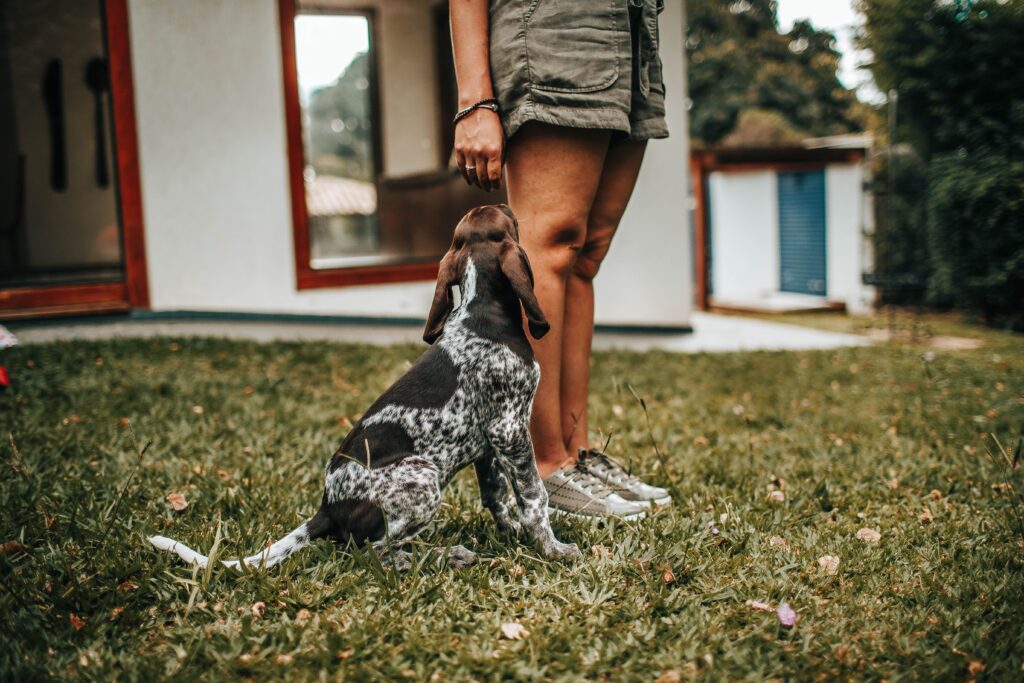
Impulse control is an essential skill for puppies to develop but one that is commonly underemphasized during initial puppy training. The purpose of impulse control is to give your puppy time to think before he reacts (either positively or negatively) to what has triggered him, whether it be excitement, the smell of food, motion, or other distractions. Since every puppy acts on instincts as their first reaction to new stimuli, impulse control requires patience and consistent training.
What Impulse Control Means in Puppies
An area that is critical for a dog’s development is impulse control. Impulse control in a puppy relates to how well they can refrain from an instantaneous reaction (jumping, lunging) and make a calm choice. Essentially, when a puppy learns to wait for something rather than rush after it, it develops impulse control.
Impulse control demonstrates itself when a puppy waits for its dinner; doesn’t run to the door; does not jump on guests. Each time a puppy resists an impulse by waiting, the chance of developing good behavior in the future increases. A puppy will never naturally develop impulse control. Impulse control has to be developed over time, through consistency and structure, as well as clearly communicated expectations.
Why Puppies Struggle With Self-Control
Young dogs tend to be naturally curious and want immediate reward from their environment. Also, young dogs’ brains have yet to develop fully, including a section of the brain which is primarily used in making decisions and being patient. Therefore, young dogs typically exhibit behaviors such as:
- Rushing towards food or toys.
- Jumping with excitement.
- Struggling to wait until commanded.
- Reacting immediately to motion or sounds.
These behaviors are typical of young dogs. Instead of eliminating the excitement, you will simply help your dog learn how to manage that enthusiasm.
Start With Calm Environment Training
The best way to start impulse control with your new puppy is by doing it in a quiet area with no distractions. When many things are going on at first (and your puppy will be confused), he will find it difficult to develop good habits.
Do this in an empty room that has very little noise or activity. Keep your training sessions as short as possible so your puppy knows exactly what is being asked of him. Once you have developed some level of success in the quiet space, you can add other distractions to the situation.
Teaching the “Wait” Behavior
One of the most basic ways you can begin developing impulse control with your dog is through training your puppy to “wait.” Start by giving your puppy a treat in your hand. As soon as your puppy reaches for it, close your hand and do so in a calm manner.
As soon as your puppy stops reaching for the treat and waits patiently (you know when he has stopped because he will look up at you), give him his treat. In this way, you are sending a very powerful message; calmness is rewarded, and impulsiveness is not. Eventually your puppy will learn that waiting or being patient is much more rewarding than acting on impulse.
Using Doorway Control for Patience
Doors can be an excellent hands-on training opportunity for teaching impulse control in your puppy. Most dogs have a strong instinct to bolt out of a house or room as soon as you open the door. To train your dog to wait, have your dog sit first before you allow him/her access to the door. When it moves toward the door, immediately close it. Do this repeatedly until your dog has learned to remain calm while waiting. This method teaches your puppy that bolting through a doorway is ineffective, and remaining patient results in quicker entry.
Meal Time as a Training Opportunity
Timing around feeding is among the most productive ways to help you teach impulse control for your new puppy. Before you place the bowl on the ground, have your puppy wait quietly and calmly.
If your puppy rushes forward as soon as he sees the bowl go down, gently lift it back up a little, and tell him “Wait” again. Once your puppy waits patiently with no rushing, you may then allow him access to his food. This teaches patience during an event that will likely be very stimulating for many dogs.
Teaching “Leave It” for Self-Control
Use the “leave it” command to teach puppies to ignore something they want. The Leave It command is helpful in teaching puppies to leave things alone (food, toys, etc.) and things on the floor. Begin with an inexpensive item on the floor. If your puppy goes for the object, cover it and wait until they quit trying to get it, quit going after it, and become relaxed. Reward your puppy at this point. This will help your puppy understand that ignoring something is as good as immediately grabbing something.
Building Impulse Control Through Play
Sessions of play are a great way to teach impulse control because they allow you to create excitement quickly and then have your puppy settle down immediately.
You should constantly be pausing during play to require your puppy to “sit” or relax. When your puppy remains relaxed, you can continue with the session. When they get too excited, you need to take a brief break in order to train them that remaining relaxed is what gets them back into action.
Managing Overexcitement
Some puppies have more trouble controlling their excitement than others. As such, management is often just as important to your puppy’s success as training.
When your puppy becomes too stimulated during a session, stop and take a short break instead of continuing. After the break, wait until they are calm enough to begin again.
Consistency Across Daily Life
Impulse control should not only happen during training sessions. It should be part of everyday routines.
Ask for calm behavior before:
- Going outside
- Receiving attention
- Getting toys
- Starting walks
These small repetitions build strong habits over time. The more consistent you are, the faster your puppy learns self-control.
Avoiding Common Mistakes
A very typical error is pushing a puppy beyond their limits in terms of both time and difficulty. All puppies have to learn to be patient; they cannot be expected to develop this ability all at once. As such, long training sessions that may push your puppy beyond what they can handle could easily result in frustrating experiences for them and therefore for you as well.
Another form of an error when it comes to training a puppy is the lack of consistency. If there are days where you choose to let your puppy rush and on other days you do not, then it will be confusing to your puppy. Therefore, having clear and consistent rules is imperative to successfully train your puppy.
Conclusion
Training impulse control in puppies involves helping them build patience, attention, and emotional stability through many repeated low-level training moments. This process will take weeks of practice, as each time your puppy remains calm while practicing impulse control, it helps build its ability to stop and think before it acts.
Through short and easy-to-do exercises such as waiting for food or being controlled at doors and calmly playing with toys, you are providing your puppy with skills of lifelong discipline. As time progresses, the knowledge your puppy has gained from these lessons provides you with a well-managed, focused, and much less misbehaved puppy in all areas of life.