
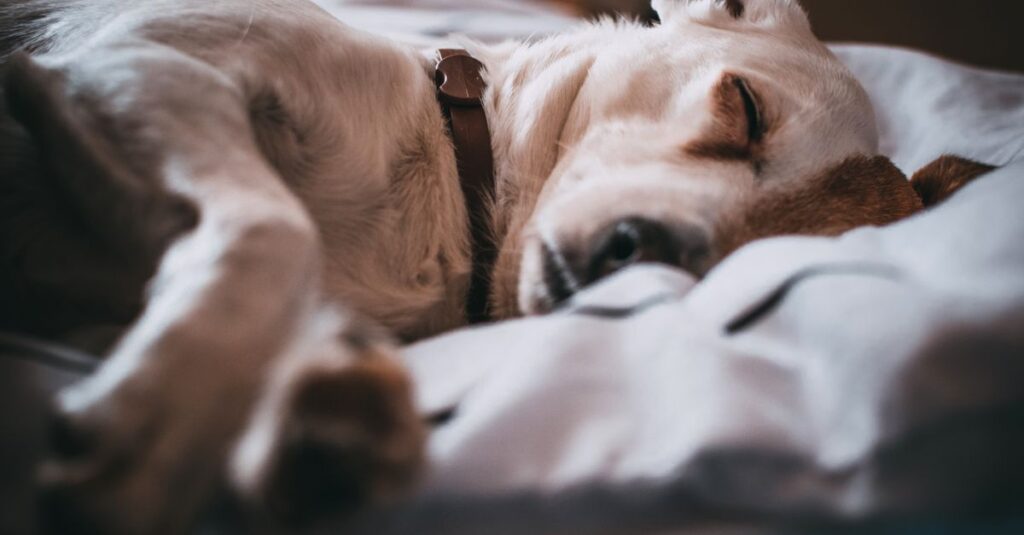
One of the many simple pleasures in owning a dog is watching your dog’s paws paddle while he sleeps; his whiskers flicker and his tail hits the ground with each thud. While this can be an indication of an abnormality in your dog, most of the time it is a normal, healthy occurrence for dogs when they are sleeping. Dogs, as do humans, go through multiple cycles of sleep which include various stages. The movement you observe when your dog is asleep (the twitching) is usually related to what stage your dog is in at that moment, specifically the stage where your dog is having a very active dream.
It should also be noted that there is a distinction between “normal” or “healthy” sleep twitching in dogs, and a dog having a seizure in its sleep. It is important to know how to distinguish the two so you will understand whether your dog needs help.
REM Sleep and Dreaming
Like people, dogs have both non-REM sleep and REM (rapid eye movement) sleep. When they are in REM sleep, the dog’s brain will be very active, closely resembling its waking state, while the body’s major muscles are normally held in a kind of temporary paralysis to keep the dog from acting out its dreams. That paralysis isn’t perfect, though, and small twitches, paw paddling, whisker movement, soft vocalizations, and rapid eye movement under closed lids often leak through.
Research on canine sleep suggests dogs, especially puppies and smaller breeds, spend a notable portion of their sleep in REM, which is part of why puppies in particular seem to twitch and vocalize so much during naps. Older dogs tend to show somewhat less dramatic twitching, though it remains a completely normal part of their sleep architecture too.
Why Puppies Twitch More
Compared to adult dogs, puppies sleep for longer periods of time and spend a greater portion of those hours in REM. Researchers think this high volume of REM helps support the puppy’s brain as it develops at such a fast rate. That’s why a napping puppy can look like they’re having an entire adventure, complete with paddling legs, muffled barks, and twitching ears, all within just a few minutes.
This twitching typically settles down somewhat as puppies mature, though healthy adult dogs continue to twitch and dream throughout their lives. There’s no need to wake a twitching dog; in fact, doing so can startle them, since dogs roused abruptly from deep sleep can occasionally react before they’re fully oriented.
When Twitching Might Be a Seizure
Normal sleep twitching is typically localized, brief, and easily interrupted, meaning a light touch or your dog’s name will usually cause them to stir or wake normally. Seizures, by contrast, tend to involve the whole body, last longer, and are harder to interrupt, often accompanied by drooling, stiffening, chomping motions, or loss of bladder or bowel control. After a seizure, dogs often seem disoriented, wobbly, or temporarily blind for a period afterward, which isn’t seen with ordinary dream twitching.
Filming an episode on your phone is genuinely useful if you’re ever unsure, since it lets your veterinarian review the actual movements rather than relying on a secondhand description. Any suspected seizure activity, especially if it recurs, warrants a veterinary workup to look for underlying causes such as epilepsy, low blood sugar, or toxin exposure.
Supporting Healthy Sleep
Most dogs sleep 12 to 14 hours a day, with puppies and seniors often sleeping even more, so twitching is simply a normal feature of a very large portion of their daily life. A quiet, comfortable sleeping area away from constant foot traffic helps dogs settle into deeper, more restorative sleep cycles.
If your dog’s twitching is mild, brief, and easily interrupted, there’s nothing to worry about, in fact, it’s a good sign that your dog is getting the REM sleep their brain needs. Reserve concern for episodes that look and sound different from your dog’s usual sleep pattern.
Creating a Sleep-Friendly Environment
Since twitching is tied to deep, restorative REM sleep, giving your dog an environment that supports uninterrupted rest actually benefits their overall health, not just their dream life. A dedicated bed away from high-traffic areas, consistent nap and bedtime routines, and minimizing sudden loud noises during known sleep periods all support healthier sleep cycles.
If your household includes young children or other pets, it’s worth teaching everyone not to disturb a sleeping, twitching dog, both to avoid an accidental startled reaction and to protect the deep sleep that supports memory consolidation and overall wellbeing, much like it does in humans.
What Researchers Still Don’t Fully Understand
While the basic mechanics of canine REM sleep are well documented, researchers don’t yet have a way to confirm exactly what dogs experience during their dreams, whether that’s replaying a walk, a play session, or something else entirely. Much of what’s known comes from observing brain activity patterns that closely mirror waking activity, combined with the physical twitching we can see.
This uncertainty is part of why veterinary sleep researchers continue studying canine sleep architecture, since better understanding dream activity in dogs may eventually offer insight into training, memory consolidation, and even certain sleep-related health conditions across species, humans included.
Conclusion
Twitching, paddling, and the occasional muffled bark during sleep are almost always signs of a healthy dog deep in REM sleep, doing exactly what their brain needs them to do. Puppies twitch the most, adults twitch less dramatically, and either way it’s a sign of good, restorative rest rather than something to interrupt.
Save your concern for movements that look and sound different from ordinary dream twitching, particularly whole-body stiffening or activity that doesn’t resolve with a gentle nudge.
Related Reading
shaking versus sleep twitching, why dogs sleep at your feet, crate training a puppy overnight
FAQs
Should I wake my dog up if they’re twitching?
In general, you don’t need to, unless the movement looks like a seizure. Waking a dreaming dog is generally a bad idea, since it can startle the animal and disrupt the restorative sleep happening during that period.
How can I tell a dream from a seizure?
A dream typically shows up as brief, localized twitching that stops if your dog is gently roused. A seizure involves the entire body, lasts significantly longer, and is followed by a period of disorientation.
Do older dogs twitch less in their sleep?
Often yes, since the proportion of time spent in REM sleep tends to decrease somewhat with age. That said, some twitching remains completely normal at any age.