
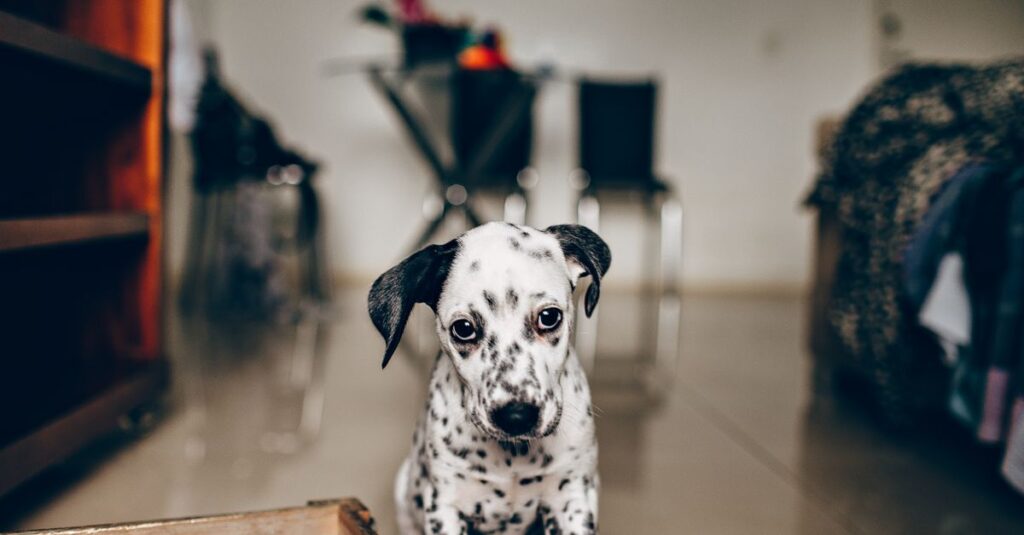
Potty pad training is a structured way to teach a puppy to eliminate on an absorbent indoor pad instead of outside, and it runs on the same core principle as any house-training method: puppies learn fastest when they’re set up to succeed repeatedly and rewarded immediately when they do. This approach works well for apartment dwellers, owners of small breeds, and anyone managing a puppy’s early weeks before their vaccination series is complete.
A full, methodical approach, rather than a scattered one, is what separates households that pad train successfully within a few weeks from those still cleaning up random accidents months later.
Step 1: Confinement and Setup
Start by limiting your puppy’s free-roam access to a single room or a puppy-proofed area using baby gates or an exercise pen. This isn’t about restriction for its own sake, it’s about making sure you can supervise closely enough to catch every bathroom opportunity in the early stages, while habits are still forming.
Place the pad in a consistent, designated spot within this confined area, away from food, water, and bedding. Some trainers recommend covering most of the floor with pads initially, then gradually shrinking the covered area toward the final target location as the puppy demonstrates understanding.
Step 2: Recognize and Redirect
Watch for the classic pre-elimination signals: sniffing intently at the floor, circling, sudden restlessness, or heading toward a corner. The instant you notice these cues, calmly guide or carry your puppy to the pad. Speed matters here, since even a few seconds’ delay can mean missing the window entirely.
In addition to watching for cues, proactively bring your puppy to the pad at predictable moments, right after waking up, after meals, after drinking water, and after active play, since these are the times a puppy is statistically most likely to need to go.
Step 3: Reward Immediately and Consistently
The instant your puppy finishes using the pad correctly, deliver praise and a small treat within about two seconds, since dogs connect consequences to actions best when the timing is nearly immediate. Over repeated successful sessions, this builds a strong, positive association between the pad and both the physical relief and the reward that follows.
Consistency among every household member matters just as much as the training itself. If one person rewards pad use enthusiastically while another ignores it, the mixed signals slow the puppy’s learning considerably, so get everyone in the house on the same page before you start.
Step 4: Handle Accidents Without Punishment
Accidents outside the pad are a normal, expected part of the learning process, not a sign of failure. Clean any accident thoroughly with an enzymatic cleaner specifically designed to break down pet waste odors, since ordinary household cleaners can leave behind a scent trace that draws your puppy right back to that same wrong spot.
Never scold, rub a puppy’s nose in an accident, or punish after the fact, since puppies don’t connect punishment delivered even a minute later to the earlier act, and this approach commonly leads to anxiety or hiding behavior rather than better bathroom habits. If accidents are frequent despite a good routine, tighten supervision and shorten the time between scheduled pad trips.
Keeping the Whole Household Consistent
Pad training succeeds fastest when every person interacting with the puppy follows the same routine, uses the same cue words, and responds to successes and accidents in the same way. Write out a simple shared schedule and posted rules if multiple family members are involved, so a puppy isn’t getting mixed signals from one household member to the next.
Visitors and pet sitters should also be briefed on the routine if they’ll be around during the training period. A single inconsistent interaction, like a well-meaning guest scolding an accident or ignoring the puppy heading for the pad, can meaningfully slow progress that took days of consistent effort to build.
Adjusting the Method for Different Living Situations
High-rise apartment dwellers, owners with mobility limitations, and anyone managing a puppy during harsh weather all have particularly strong reasons to lean on pad training as a longer-term solution rather than a temporary bridge. In these cases, investing in a larger, more durable pad station or a dedicated pad-holder tray designed for permanent indoor use makes sense.
For households eventually planning to move to an outdoor-only routine, keep the pad in the same relative location, near an exterior door, throughout training whenever possible, since this naturally sets up an easier future transition compared to a pad placed somewhere in the center of the home.
How Long Full Pad Training Actually Takes
Most puppies show reliable pad use somewhere between four and six weeks of consistent training, though it’s rarely a straight line. You’ll typically see quick early progress as the puppy starts noticing the pad, followed by a plateau where accidents pick back up, often right around a growth spurt or a change in routine, before things click into place more permanently. That plateau trips a lot of owners up into thinking the method has failed, when it’s actually a normal part of the learning curve for most puppies.
Age plays a role too. A puppy that starts pad training at eight weeks old will generally take longer to become fully reliable than one that starts at twelve or fourteen weeks, simply because bladder control improves with physical maturity, not just repetition. If you’re not seeing any progress at all after two to three weeks of consistent effort, that’s usually a sign to revisit your supervision routine or reward timing rather than the method itself.
Conclusion
A structured, four-step approach, confinement, cue recognition, immediate rewards, and calm handling of accidents, gives pad training the best possible chance of success with the fewest setbacks. Consistency among every household member is just as important as any individual technique.
With patience and a clear routine, most puppies reach reliable pad use within a matter of weeks, setting the stage for a clean, low-stress house-training experience.
Related Reading
speeding up pad training, overnight crate training, why adult dogs have bed accidents
FAQs
How many pads should I put down at first?
Starting with a larger covered area and gradually narrowing it down to one target pad tends to work better than starting with just a single small pad from day one.
What scent should I use to attract my puppy to the pad?
Some pads come with a built-in attractant scent. You can also leave a small bit of soiled material from a previous successful use nearby to help remind your puppy where to go.
Is pad training harder than outdoor training?
Neither is inherently harder, success with either one mostly comes down to consistency, supervision, and rewarding your puppy right away.