
This post contains affiliate links. As an Amazon Associate we earn from qualifying purchases, at no extra cost to you. We only recommend products we’d genuinely put our own dogs in.
A travel crate does more than just contain your dog on a trip. It keeps them safe during transit, gives them a familiar, secure space in an unfamiliar environment, and, in the case of car travel, meaningfully reduces injury risk during a sudden stop or collision. With so many crate styles on the market, from lightweight fabric carriers to reinforced aluminum kennels, the right choice depends heavily on how, and how often, you actually travel with your dog.
Below, we break down the main crate categories, what to look for in construction and sizing, and our specific picks for different types of travelers, all pulled from crates we’d genuinely trust with our own dogs.
Types of Travel Crates
Hard plastic airline-style crates are the most versatile option, widely accepted for both car travel and airline cargo transport, offering solid protection and good ventilation through side vents. Soft-sided fabric carriers are lighter and easier to store, but they generally suit only small dogs and are best for short trips rather than crash protection in a vehicle.
Wire crates fold flat for storage and offer excellent visibility and airflow, making them a popular choice for car travel and hotel stays, though they aren’t rated for airline cargo transport. Heavy-duty aluminum or reinforced crates sit at the premium end, purpose-built for serious durability and, in some cases, genuine crash-test certification for vehicle travel.
Our Top Picks
Petmate Sky Kennel (Airline-Approved, Multiple Sizes): This is the pick for anyone who travels with their dog on a regular basis, whether that’s by car or by plane. It’s built to meet IATA airline cargo standards, has 360-degree ventilation, and includes tie-down strap holes so it can be secured in a vehicle too. It ships with the essentials, ID stickers and an absorbent travel pad included. Sizes run from 21 inches, for dogs up to 15 lbs, all the way up to 40 inches, for dogs in the 70-90 lb range. View on Amazon →
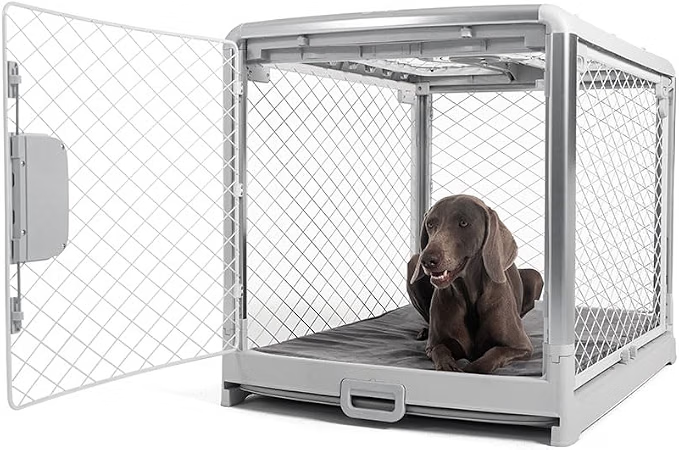
Diggs Revol Collapsible Travel Crate: A modern, foldable crate with an aluminum frame that sets up in under 60 seconds and folds flat with wheels for easy transport. It’s a great fit for hotel stays, road trips, or anyone who’d rather not have a crate that looks out of place in the living room between trips. It’s been tested to withstand 180 lbs of pressure at its weakest point, well beyond what a typical wire crate can handle. View on Amazon →
MidWest iCrate Folding Wire Crate: A budget-friendly, reliable choice for car trips and hotel stays where airline certification isn’t a concern. It folds flat for the trunk, comes with a divider panel that’s handy if you’re using it for a growing puppy, and has secure slide-bolt latches plus a leak-proof tray that makes cleanup easy. View on Amazon →
Getting the Sizing Right
A properly sized travel crate should let your dog stand up fully without ducking, turn around completely, and lie down with legs extended, without so much extra space that they can slide around during sudden stops or turns. Measure your dog from nose to base of tail and floor to top of head or ears while standing, then check that measurement against the manufacturer’s size chart.
For airline travel specifically, check your airline’s exact crate requirements before purchasing, since dimensions, ventilation standards, and door mechanisms are strictly regulated and vary somewhat between carriers. A crate that fits your dog but doesn’t meet a specific airline’s technical requirements can result in denied boarding at the airport.
Securing the Crate for Car Travel
An unsecured crate, even a sturdy one, can become dangerous during a sudden stop, sliding forward or tipping over. Use the tie-down points included on quality travel crates, along with cargo straps routed through the crate’s frame, to anchor it firmly to the vehicle, ideally positioned low and against the seatback rather than loose in an open cargo area.
Placement matters too: a crate secured in the back seat, footwell, or cargo area against a solid barrier generally performs better in real-world testing than one placed in an open trunk space with nothing behind it to prevent forward movement on impact.
Helping Your Dog Adjust
Introduce a new travel crate well before your actual trip, letting your dog explore it at home with the door open and treats scattered inside. Short practice car rides in the crate, starting with just a few minutes around the block, help your dog acclimate gradually rather than experiencing a new crate and a long trip at the same time.
Pack familiar bedding or a worn item of your clothing to add a comforting scent, and avoid feeding a large meal right before travel to reduce the chance of motion sickness.
Conclusion
For most travelers, the Petmate Sky Kennel offers the best combination of airline compliance and everyday car-travel durability, while the Diggs Revol is worth the upgrade for anyone prioritizing convenience and looks, and the MidWest iCrate remains a smart budget pick for occasional trips. Whichever you choose, prioritize correct sizing and secure installation over any single feature.
A well-chosen, well-secured travel crate pays for itself many times over in reduced stress, both yours and your dog’s, on every trip you take together.
Related Reading
our crash-tested crate picks, crates by travel mode: car, plane, train, crates for anxious travelers
FAQs
Do I need a crash-tested crate for regular car trips?
It’s not mandatory, but it will noticeably increase your dog’s level of safety, particularly if you’re a frequent traveler.
Can I use the same crate for home and travel?
Yes, and it’s actually quite common. Using a crate your dog is already comfortable in at home can meaningfully reduce travel-related stress.
What size crate does my airline require?
Size requirements vary depending on the airline and on whether the crate will ride in the cabin or get checked as cargo, so always verify the correct size with your airline before booking.