
The way dogs lick things, their owner’s hands, their paws, the floor, serves a lot of different functions: a greeting, self-grooming, a way to relieve stress, or even a sign of a medical issue, all delivered through the same simple motion. Because there could be so many different reasons, figuring out why your dog licks excessively starts with paying attention to what, or who, they’re licking, and when.
Occasional licking of people, paws, floors, or furniture is completely normal. It’s worth investigating further when it becomes frequent, focuses on one particular part of the body, or comes with other changes like hair loss, redness, or restlessness.
Licking as Communication and Comfort
Puppies lick their mother’s face and mouth to encourage her to regurgitate food for them to eat, and later in life, dogs carry that instinct forward as a submissive or affectionate greeting toward people and other dogs. Licking releases endorphins for the dog doing it, which is part of why it can become a self-soothing habit during stressful moments, such as a storm, being separated from an owner, or visiting somewhere unfamiliar.
Some dogs lick the air, their lips, or nearby surfaces when they’re anxious or nauseated, a behavior sometimes called air licking. If this shows up in a specific context, like right before car rides or during fireworks, anxiety is a reasonable first suspect.
Licking Objects and Floors
Persistent licking of floors, walls, or fabric, sometimes called ELS or excessive licking of surfaces, has been associated in veterinary research with underlying gastrointestinal problems in a meaningful percentage of cases. Dogs that lick surfaces obsessively may be experiencing nausea, reflux, or mild abdominal discomfort that they can’t communicate any other way.
Boredom and lack of mental stimulation can produce the same behavior in dogs with no GI disease at all, so context matters. A dog who paces, licks the floor, and shows other repetitive behaviors when left alone for long stretches is likely under-stimulated rather than sick, while a dog who licks obsessively regardless of activity level deserves a veterinary workup.
Paw and Skin Licking
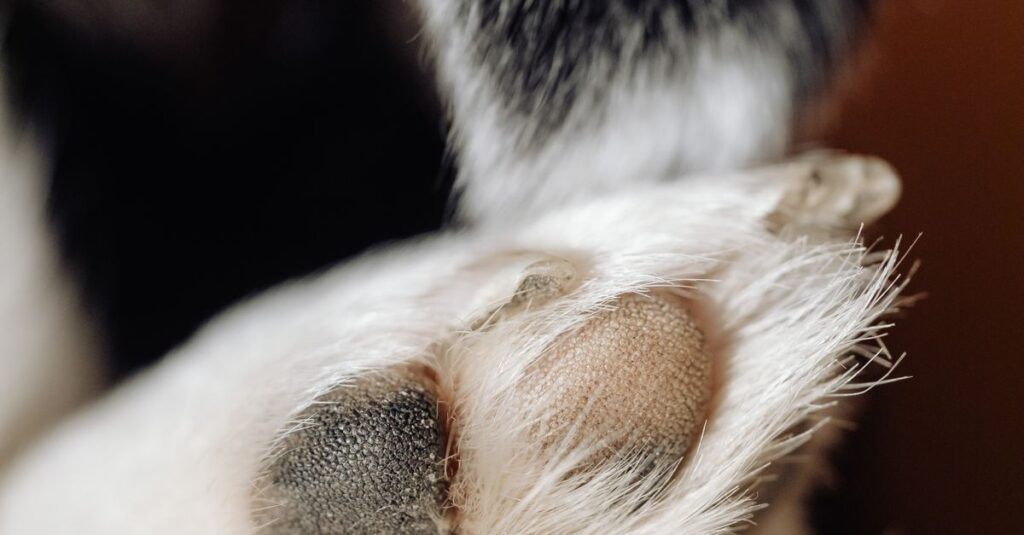
When licking is concentrated on the paws or a specific patch of skin, allergies are the leading cause, whether environmental, seasonal, or food-related. Fleas, mites, yeast infections, and contact irritants like new carpet cleaners or lawn treatments can all trigger the same paw-chewing response. Left unaddressed, constant licking creates a self-perpetuating cycle: irritation causes licking, licking causes moisture and inflammation, and that inflammation causes even more licking.
Anxiety-driven acral lick dermatitis, sometimes called a lick granuloma, is another possibility, especially in dogs prone to separation anxiety or compulsive behaviors. These lesions typically appear on the front legs and can become raw or infected if the underlying anxiety isn’t addressed alongside the skin.
What You Can Do
Start by identifying the pattern: is your dog licking you, objects, or themselves, and does it correlate with meals, being left alone, or specific times of day? A food and symptom diary for a week or two often reveals the trigger. Increasing exercise and enrichment, such as puzzle feeders and sniff-focused walks, resolves boredom-driven licking in many cases.
If licking is paw- or skin-focused, check between toes and pads for redness, discharge, or an odor, and consider a vet visit to rule out allergies or infection. Persistent surface or air licking, especially with any signs of stomach upset, warrants a veterinary exam to rule out gastrointestinal causes before assuming it’s purely behavioral.
Building a Licking Diary
Because excessive licking has so many possible causes, tracking details for a week or two often reveals patterns that aren’t obvious in the moment. Note the time of day, what your dog is licking, how long it lasts, and what happened just before it started, whether that’s being left alone, finishing a meal, or a loud noise outside.
Bring this record to your veterinarian if the behavior doesn’t improve with basic enrichment and environmental changes. A detailed pattern, such as licking that consistently follows meals, can point a vet toward gastrointestinal causes far faster than a vague description of “licks a lot,” and can meaningfully shorten the path to an accurate diagnosis and effective treatment plan.
How Enrichment Reduces Boredom Licking
For dogs whose licking is rooted in boredom rather than a medical cause, structured enrichment often makes a bigger difference than owners expect. Rotating toys weekly instead of leaving the same ones out constantly keeps novelty high, and scent-based games, like hiding treats around a room, engage a dog’s brain in a way that a simple walk around the block doesn’t.
Puzzle feeders that require a dog to work for their food slow down mealtime and provide a genuine mental task, which can meaningfully reduce restless, repetitive behaviors like licking floors or furniture later in the day. Even 10 to 15 minutes of dedicated enrichment activity daily can noticeably calm a bored, licking-prone dog.
Conclusion
Licking is one of the most flexible behaviors in a dog’s toolkit, covering everything from affection to anxiety to a genuine medical complaint, which is exactly why context matters so much in figuring out the cause. Tracking when, what, and how much your dog licks gives you and your vet the clearest path to the right explanation.
Most cases resolve with a combination of more enrichment, a look at allergies or skin health, and patience, but persistent or worsening licking is always worth a professional opinion.
Related Reading
licking during petting specifically, anxiety-related shaking, calming crates for anxious dogs
FAQs
Is it bad to let my dog lick my face?
There’s a small risk of bacteria transmission, so it should be avoided around open wounds, the mouth, or with immunocompromised people, though an occasional lick on the face poses very little risk to most healthy adults.
Why does my dog lick blankets and furniture?
Your dog may have developed this habit as a way to soothe themselves, out of boredom, or possibly nausea or mild GI upset, worth mentioning to your veterinarian if it happens often.
How do I stop compulsive paw licking?
Since simply putting a cone on your dog does nothing about the reason they’re licking, you need to identify the likely cause, allergies, an infection, or anxiety, and seek veterinary treatment if the licking is frequent, localized, or leaving the skin raw.