
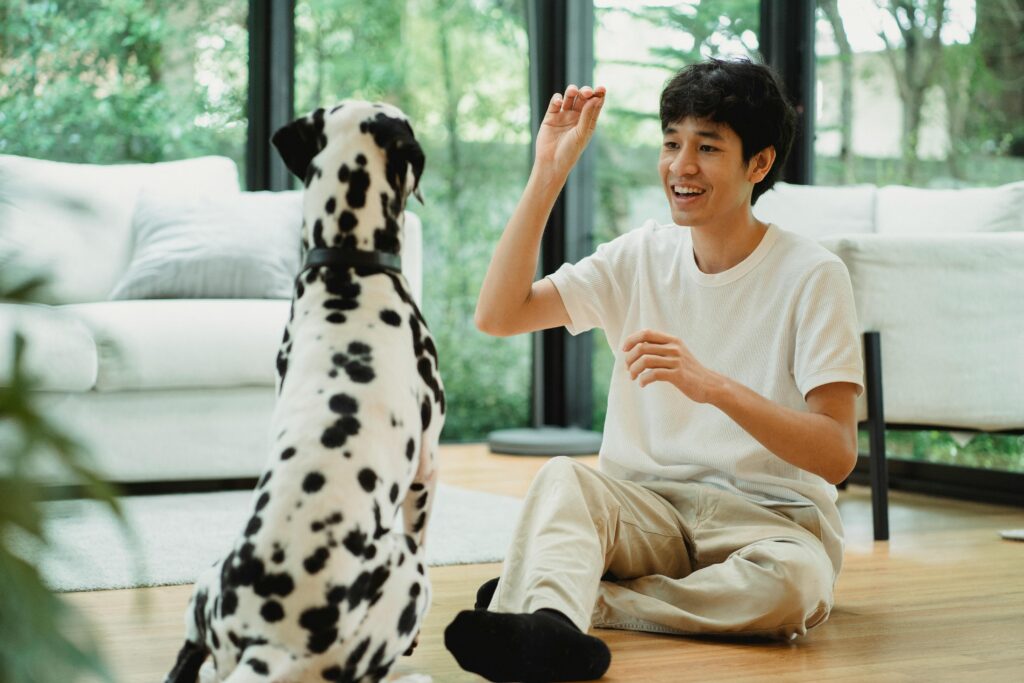
The first way your dog finds comfort in being close to you is the amount of time he spends sleeping next to you. As a rule, dogs tend to be at their most vulnerable when they are asleep; therefore, they will only lie close to individuals who make them feel absolutely safe.
If your dog chooses to sleep right next to you, on top of your bed, or even just in the same room without hesitation, then he views you as a haven. Some dogs even choose to sleep with their bellies up (which is a very rare occurrence), indicating how much trust and confidence they have in you. Conversely, if your dog prefers to hide or sleep in a corner of his bedroom, then he probably doesn’t feel safe.
Your Dog Makes Eye Contact with You
Making eye contact is very important in building a bond between dogs and humans. When your dog makes eye contact with you in a relaxed manner, that is a clear indication that there is an emotional connection and that your dog trusts you. Calm, relaxed eye contact is indicative of your dog feeling emotionally connected to you and trusting your presence. On the other hand, when a dog intensely stares at you, that is typically an indication of either fear/anxiety or extreme alertness. So long as the eye contact is calm and soft and not rigid or forced, it’s likely a good thing!
Your Dog Follows You Around
Some dogs love to stay close to their owners and follow them from room to room. This behavior isn’t solely dependent on separation anxiety. Many dogs find great comfort in having their owner nearby, regardless of the location. This is particularly true among the more social breeds. While each dog is unique and some may require more space than others, dogs that consistently follow their owners are demonstrating a high level of trust.
Your Dog Shows Relaxed Body Language
Relaxed Body language is perhaps the best way to determine if your dog trusts you. A dog that feels safe around you will display relaxed Body language, such as a loose tail, soft facial expression, and relaxed ears. Additionally, a dog that feels safe will typically stand or sit loosely and won’t appear stiff or tense. In contrast, a fearful/distracted/defensive dog will exhibit a variety of Body language signals, including tucking their tail, avoiding eye contact, cowering, growling, etc.
Your Dog Exposes Its Belly
Rolling over to expose their belly is one of the biggest signs that a dog trusts someone. Most dogs naturally defend themselves when they’re lying on their backs due to the sensitivity of their stomach area. Therefore, if your dog lets you gently pet their belly or lies in that position without getting nervous or jumping off the table, then they feel extremely safe with you. However, it’s worth noting that not all instances of belly rolling mean they’d like for you to rub their belly. Some dogs roll onto their backs simply out of relaxation and because they feel comfortable enough to let their guard down.
Your Dog Brings You Toys
Another way a dog demonstrates trust and affection for you is by bringing you Toys. Bringing Toys to an owner is primarily based on two things: playtime and companionship. In many cases, bringing you a toy suggests that your dog wants to interact with you. It also shows that your dog trusts you enough to share something with you that they value. Toy-sharing is especially common in breeds with strong retrieving instincts and/or those with very playful personalities.
Your Dog Remains Calm During Your Absence
Most dogs that trust their owners tend to handle brief separations from their owners fairly well. Of course, excitement upon returning home is perfectly normal; however, a securely attached dog shouldn’t freak out too badly when left alone. A securely attached dog understands that his or her owner will come back; therefore, he/she will remain relatively calm until the owner returns. This emotional security is a fundamental component of creating a solid bond between a dog and its owner.
However, severe anxiety caused by leaving your dog alone could be indicative of separation anxiety rather than simply a lack of trust. Anxiety-based issues need to be addressed separately to prevent harm to yourself or the dog.
Your Dog Responds Positively to Your Voice
Dogs that trust their owners respond positively to the tone used when speaking to them. Since dogs rely heavily on vocal cues to understand emotions, they’ll frequently respond positively to your voice when using a calm tone. In addition, many dogs will begin to relax and even wag their tails or approach you when they hear your voice. A positive response to voice indicates that your dog associates your presence with feelings of safety, security, and happiness.
It should be noted that Harsh and unpredictable communication can cause irreparable damage to the trust you’ve built with your dog over time. On the other hand, continued use of calm and predictable communication can strengthen the emotional bond between you and your dog over time.
Your Dog Seeks Physical Contact
Closeness is another excellent example of how trust works between humans and animals. For instance, when your dog leans against you or sits next to you (and vice versa), then your dog is saying “I’m happy” — he feels safe enough to lower his defenses and get physically closer to you. Also, when your dog initiates gentle contact (such as nuzzling) with you while resting or sitting together, it shows that he enjoys being close to you. Each dog displays physical affection differently; however, if your dog consistently chooses to be physically close to you (whether he rests his head on your lap or presses himself against you), it’s generally a sign that he trusts you and values the relationship.
Your Dog Shows You Its Back
A lesser-known yet significant indicator of trust is when your dog turns its back towards you. In nature, displaying the back side of oneself means dropping one’s defenses. If your dog turns his back on you while remaining relaxed in your presence, it indicates that he does not perceive you as threatening. Rather than continually monitoring everything you do (as would be expected from a fearful/distrustful animal), he trusts you enough not to worry about what might happen.
This type of emotional security can be a quiet yet powerful demonstration of trust.
Your Dog Eats Comfortably Around You
As mentioned previously, Eating is an inherently vulnerable activity for dogs. If your dog eats freely next to you (without attempting to steal food or eating anxiously), then it demonstrates a high level of trust. A fearful/unsafe dog may eat erratically or nervously while eating in front of other people (including family members). A calm Eating atmosphere clearly shows that your dog feels safe in their environment and trusts the people surrounding them.
Your Dog Seeks You in New Situations
When dogs enter unknown environments, they will often seek out familiar faces for support. If your dog consistently sticks by your side when entering new locations or checks in with you before acting/reacting to anything in that new setting, then it’s a clear indicator that he trusts you. By doing so, your dog views you as a guide and source of safety within uncharted territory.
Your Dog Recovers Quickly From Stress Around You
Every canine will experience stress at times; however, a trusting dog will typically return quickly to emotional balance when its owner is near again. Whether through your voice, touch, or mere presence, many dogs tend to settle down considerably faster after experiencing stress when they know you’re nearby. This ability to regulate emotions provides a clear indication that your dog values the relationship with you as a source of safety and comfort.
Conclusion
Developing trust between a dog and its owner requires patience and an understanding of each dog’s personality traits — combined with providing quality experiences throughout the process. Through many small actions demonstrated in everyday life (e.g., being relaxed while sleeping next to you, making regular eye contact with you, wanting to spend time next to you), we can identify whether our canine companions feel secure/trusting in our presence.
Related reading: Why Does My Dog Suddenly Become Clingy, Causes of Sudden Behavior Changes in Dogs, Separation Anxiety in Dogs