
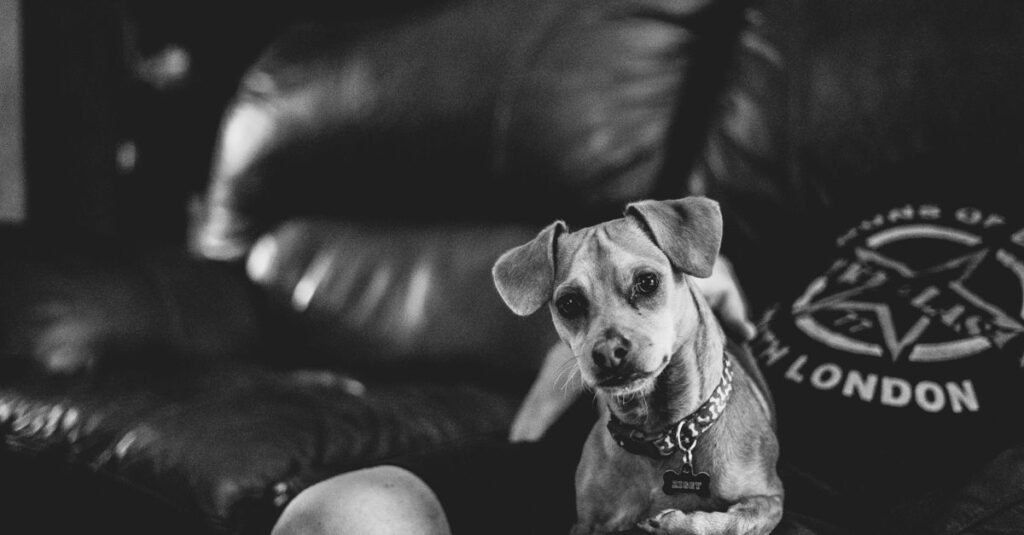
There’s a unique kind of chaos that comes with a seventy-pound dog deciding your lap is the perfect place to sit. Sometimes it’s a full flop onto your legs, other times a determined lean against your side. In almost every case, a dog sitting on their owner is a form of positive communication.
Understanding why your dog does this can help you decide whether to let it continue, redirect it, or simply enjoy the closeness.
It’s a Sign of Attachment and Trust
Dogs are a famously social species, and physical closeness is one of the clearest ways they express that bond. When your dog sits on you or leans against you, they’re putting themselves in physical contact with someone they consider part of their social unit — much the same way puppies pile onto each other and their mother for warmth and reassurance. For a dog with a strong attachment to their owner, sitting on you is essentially the canine equivalent of holding hands.
Some breeds are especially prone to this. Larger breeds like Great Danes and Mastiffs are famous for treating themselves as lap dogs, seemingly unaware that they no longer fit.
Seeking Security or Comfort
It’s easy to assume a dog seeking physical contact is simply after affection, but many dogs display this behavior because they’re anxious, startled, or unsure of their surroundings. They have a strong need to feel secure, and lean on their owner’s presence to get there.
If you notice your dog sitting on you more specifically during thunderstorms, fireworks, or visits from strangers, it’s a good sign the behavior is rooted in seeking reassurance rather than simple affection. This is worth paying attention to, since a sudden increase in the behavior can mean your dog has picked up on a new stressor in their environment, routine, or even your own stress level. A calm den-like crate setup can also help give an anxious dog somewhere to retreat besides your lap.
Guarding and Territorial Behavior
In some dogs, sitting on or very close to an owner is part of a broader pattern of guarding that person from other pets, animals, or people. This is more likely if the behavior comes with stiffening, staring, or growling when another dog or person approaches — in these cases, the sitting isn’t purely affectionate, it’s positional, keeping the dog between their owner and a perceived threat.
This kind of resource-guarding behavior toward a person is worth addressing with the help of a certified trainer or veterinary behaviorist if it escalates, since it can create friction with other household pets or visitors.
Should You Encourage It?
For most dogs, sitting on you is a harmless, even endearing habit rooted in social bonding, and there’s no need to discourage it unless it becomes physically uncomfortable, unsafe with a very large dog, or tied to anxiety or guarding that needs to be addressed.
If you want to set boundaries, teaching a reliable “off” or “place” cue and rewarding calm behavior nearby, rather than punishing the closeness itself, tends to work best. If the behavior seems driven by anxiety rather than simple affection, confidence-building exercises, a predictable routine, and, if needed, guidance from a professional can help your dog feel secure without needing to be physically on top of you at all times.
Reading Your Dog’s Full Body Language
Context clues beyond the sitting itself help clarify what your dog is communicating. A relaxed body, soft eyes, and a loose, wagging tail while sitting on you point toward simple affection and bonding. Stiffness, a lowered head, pinned ears, or a fixed stare toward another person or animal in the room suggest the behavior may be more about guarding or anxiety than closeness.
Multi-dog households are worth watching closely for this pattern, since a dog sitting on an owner while staring down another pet can be an early sign of resource guarding around attention. Addressing this early — with separate calm time for each dog and consistent, fair attention distribution — prevents it from developing into a bigger conflict down the road.
How to Build a Confident, Secure Dog
If sitting on you seems tied more to anxiety than simple affection, working on your dog’s overall confidence can reduce their underlying need for constant physical reassurance. Predictable daily routines, positive exposure to new experiences, and reward-based training all help a dog feel more secure navigating the world independently.
Short, structured independence exercises — like calmly rewarding your dog for settling on their own bed a few feet away rather than always at your side — can gradually build comfort with mild physical distance, without ever removing the genuine affection and closeness that make your bond special in the first place.
Conclusion
In the overwhelming majority of cases, a dog who sits on you is simply telling you they feel safe, bonded, and happy to be close — a small daily reminder of the trust between you. Watching body language helps you tell the difference between simple affection and anxiety or guarding, so you can respond appropriately either way.
Whether you let it continue or gently redirect it, there’s no need to see this endearing habit as anything other than what it usually is: love, in dog form.
Related Reading
- Why Does My Dog Sleep at My Feet?
- Why Does My Dog Suddenly Become Clingy
- How to Handle Fearful Dogs
- Why Does My Dog Lick Me When I Pet Her?
- Anxiety Dog Crate: Best Crates and Covers for a Nervous Dog
FAQs
Is it bad to let my dog sit on my lap?
Not inherently — as long as it’s comfortable for both of you and isn’t linked to guarding behavior toward other pets or people.
Why does my dog only sit on me during storms?
Your dog may be feeling anxious because of the storm. They’re seeking comfort, safety, and a sense of security from someone they trust.
Can sitting on me make my dog more dominant?
Dominance theory used to be how a lot of animal behavior was explained, but behaviorists now generally agree that a dog seeking physical closeness with their owner is about attachment and comfort, not an attempt to climb the household hierarchy.