
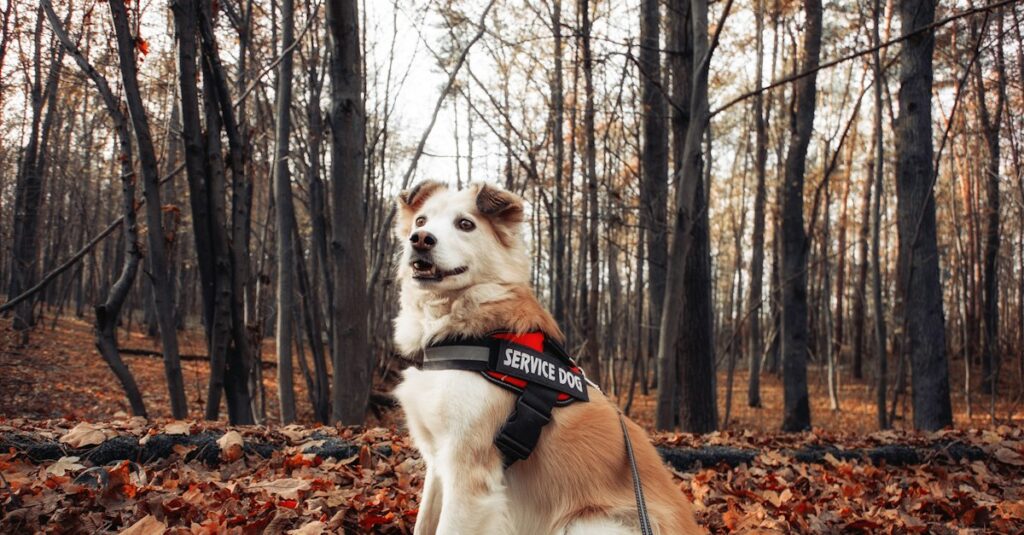
This dog harness size chart is an easy way to find the correct harness size based on chest girth, ranging from XXS for toy breeds to XXL for giant breeds. Use the size finder below to get your dog’s harness size from a chest measurement, a breed or a weight. You will also get guidance on what to do if your dog falls between two sizes, and on how the fit changes with each style of harness.
A harness only works when it fits well. One that is too big will allow a dog to back out of it at the least convenient moment. One that is too small, or the wrong shape, will rub the skin behind the front legs, and it can also shorten your dog’s stride. The right harness is one that stays in place, allows full use of the dog’s shoulders, and gives the dog no way to back out.
Dog Harness Size Finder
Measure around the widest part of your dog’s chest. If you cannot, pick a breed or enter a weight for an estimate.
Chest girth is the measurement that decides harness size. Weight is only a rough guide, because a 50-pound Bulldog and a 50-pound Border Collie are built very differently.
Dog Harness Size Chart
| Size | Chest girth (inches) | Chest girth (cm) | Dog weight | Typical breeds |
|---|---|---|---|---|
| XXS | 10 to 14 | 25 to 36 | Up to 6 lb | Chihuahua, toy breed puppies |
| XS | 13 to 17 | 33 to 43 | 5 to 10 lb | Yorkshire Terrier, Maltese, Pomeranian, Toy Poodle |
| S | 16 to 22 | 41 to 56 | 10 to 25 lb | Shih Tzu, Cavalier, Miniature Schnauzer, Jack Russell |
| M | 20 to 28 | 51 to 71 | 25 to 50 lb | Beagle, French Bulldog, Cocker Spaniel, Corgi, Border Collie |
| L | 26 to 36 | 66 to 91 | 50 to 80 lb | Labrador, Golden Retriever, Boxer, Husky, German Shepherd |
| XL | 32 to 42 | 81 to 107 | 80 to 110 lb | Rottweiler, Bernese Mountain Dog, Great Dane |
| XXL | 38 to 50 | 97 to 127 | Over 110 lb | Mastiff, Saint Bernard, Newfoundland |
Overlaps between the sizes in the dog harness size chart are normal, since harnesses adjust over several inches of strap length. A dog with a 27-inch chest will fit either of two sizes: a medium let all the way out, or a large taken in. For adults, the better buy is usually the larger size, since straps that are stretched to the maximum leave no slack for a winter coat or a few extra pounds.
How to Measure a Dog for a Harness
- Chest girth. With your dog standing, wrap a soft tape around the widest part of the ribcage, usually an inch or two behind the front legs. Keep it snug and level.
- Neck. Measure around the base of the neck, lower than where a collar sits, where the neck meets the shoulders.
- Weight. Note it as a cross-check. If girth and weight point to different sizes, trust the girth.
- Length, for vests only. Measure from the base of the neck to the base of the tail if the harness covers the back.
No tape measure? Use a piece of string or a phone charger cable, mark the point where it meets, and lay it against a ruler. Take two measurements, and measure after a meal or exercise if you want the biggest reading. For fluffy breeds, press through the coat to the body, as the harness will flatten the fur anyway.
How Should a Dog Harness Fit? A 60-Second Check
- Two fingers. You can slide two fingers flat under every strap, and no more.
- Clear of the armpits. The girth strap sits two to three finger-widths behind the front legs, not in the armpit.
- Free shoulders. Nothing crosses the point of the shoulder. Your dog’s front legs should reach forward as far as they do without the harness.
- No rotation. The harness stays centered when the lead pulls to one side.
- No escape. Stand in front of your dog and pull the harness gently forward towards the head. It should not slide over the shoulders.
Do the back-out test before your first walk. The most common escape happens when a frightened dog plants its paws and reverses, which turns a loose harness inside out over the dog’s head. If your dog can do this at home, tighten both the neck and girth straps one notch each and test again. Some slim, deep-chested dogs will need a harness with an additional belly strap.
Dog Harness Sizes by Breed
| Breed | Typical adult chest girth | Harness size |
|---|---|---|
| Australian Shepherd | 26 to 32 in (66 to 81 cm) | L |
| Beagle | 20 to 26 in (51 to 66 cm) | M |
| Border Collie | 24 to 30 in (61 to 76 cm) | M |
| Boxer | 28 to 34 in (71 to 86 cm) | L |
| Bulldog (English) | 26 to 32 in (66 to 81 cm) | L |
| Cavalier King Charles Spaniel | 16 to 21 in (41 to 53 cm) | S |
| Chihuahua | 11 to 15 in (28 to 38 cm) | XXS |
| Cocker Spaniel | 20 to 26 in (51 to 66 cm) | M |
| Doberman Pinscher | 30 to 36 in (76 to 91 cm) | L |
| French Bulldog | 20 to 26 in (51 to 66 cm) | M |
| German Shepherd | 28 to 36 in (71 to 91 cm) | L |
| Golden Retriever | 28 to 36 in (71 to 91 cm) | L |
| Great Dane | 34 to 46 in (86 to 117 cm) | XL |
| Labrador Retriever | 28 to 36 in (71 to 91 cm) | L |
| Mastiff | 40 to 52 in (102 to 132 cm) | XXL |
| Pembroke Welsh Corgi | 22 to 28 in (56 to 71 cm) | M |
| Pomeranian | 12 to 16 in (30 to 41 cm) | XS |
| Pug | 20 to 24 in (51 to 61 cm) | M |
| Rottweiler | 32 to 42 in (81 to 107 cm) | XL |
| Shih Tzu | 16 to 20 in (41 to 51 cm) | S |
| Siberian Husky | 24 to 32 in (61 to 81 cm) | L |
| Yorkshire Terrier | 12 to 16 in (30 to 41 cm) | XS |
Hard-to-Fit Body Shapes
| Build | Breeds | What goes wrong | What to look for |
|---|---|---|---|
| Deep chest, narrow waist | Greyhound, Whippet, Doberman, Boxer | Harness slides back and the dog reverses out | A longer harness with a second strap behind the ribcage |
| Barrel chest, short neck | Bulldog, French Bulldog, Pug | Neck opening too tight when the chest fits | Wide neck opening, girth strap adjustable on both sides |
| Long body, short legs | Dachshund, Corgi, Basset Hound | Girth strap sits in the armpits and rubs | A harness cut to sit further back, or a vest style |
| Tiny and fine-boned | Chihuahua, Yorkshire Terrier, toy puppies | Hardware is heavy, straps too wide | Lightweight vest or a narrow-strap harness in XXS |
| Thick double coat | Husky, Samoyed, Bernese | Matted fur under the straps | Smooth, rolled or padded straps. Remove after walks |
Which Type of Harness Is Best?
| Type | Best for | Watch out for |
|---|---|---|
| Back-clip | Small dogs, dogs that walk well, running | Gives a strong puller more power |
| Front-clip | Dogs learning not to pull | Must be fitted snugly or it twists. The lead can tangle in the front legs |
| Dual-clip | Training now, relaxed walks later | More straps to adjust |
| Step-in | Dogs that hate things over their head | Easiest to escape from |
| Padded vest | Toy breeds, flat-faced breeds | Warm in summer, fewer adjustment points |
Shape is just as important as type. A Y-shaped harness, where the straps meet in a Y on the breastbone, allows the shoulders to move freely. A straight strap that crosses the front of your dog’s chest sits on the shoulder joint and can shorten the stride, which is an unfair price to pay for an active young dog. Harnesses do help to manage pulling, but they don’t teach your dog to stop. That takes training: see how to stop leash pulling and leash training for puppies.
What Size Harness for a Puppy?
Fit the puppy you have now. Get a harness where your puppy’s current girth sits at the lower end of the size range, with a minimum of 4 adjustment points. It will give you a few months of use. The straps need to be checked every week, as a puppy can grow an inch in just a few days. Move up a size once any of the straps is at its last setting.
To plan ahead, the puppy weight calculator estimates adult size, and the dog collar size chart covers the collar your puppy still needs for ID tags.
Related Reading
- How to Stop Leash Pulling
- Leash Training for Puppies
- Best Retractable Dog Leashes for Daily Walks
- How to Train a Puppy to Accept a Collar
- Traveling Safely With Dogs
FAQs
How do I know what size harness to get my dog?
Measure the chest girth, which is the distance around the widest part of the ribcage, directly behind the front legs. The number you get should be matched to the harness maker’s size chart. Weight should be used for verification only. When your dog sits between two sizes, it is usually better to go with the larger size and tighten the straps.
What size harness does a 30-pound dog need?
Most 30-pound dogs have a chest girth of about 22 to 26 inches and fit a medium, but build makes a big difference. For example, a 30-pound French Bulldog has a much deeper chest than a 30-pound Whippet, so measure the girth instead of relying on weight alone.
Should I size up or down if my dog is between harness sizes?
Size up in almost all cases. Harnesses are adjustable, so the larger one can be tightened, while one that is too small will rub behind your dog’s front legs and limit the movement of his shoulders. There are exceptions, though; a very slim escape artist would be safer in the smaller size or in a harness designed with an extra belly strap.
How tight should a dog harness be?
The straps should fit snugly, with enough space for two fingers flat underneath each strap. Neither you nor the lead should be able to make the harness slide from side to side, and you shouldn’t be able to pull it forward over the shoulders at all. If it leaves marks in the coat or your dog walks with shorter steps, it is too tight.
Is a harness better than a collar for walking?
For many dogs, yes. A harness spreads pressure across the dog’s chest rather than putting it directly on the throat. This makes a harness safer for small breeds, flat-faced breeds, dogs with neck or airway problems, and dogs that pull. However, most dogs still need to wear a collar for ID tags, even if you attach the leash to the harness.
Can a dog wear a harness all day?
It is better to remove your dog’s harness when he is indoors. Wearing a harness all day long can mat the coat, rub the skin, or get caught on furniture or in a crate. Simply put the harness on for walks and travel, check the skin under it regularly, and leave a flat collar with an ID tag on your dog at other times.