
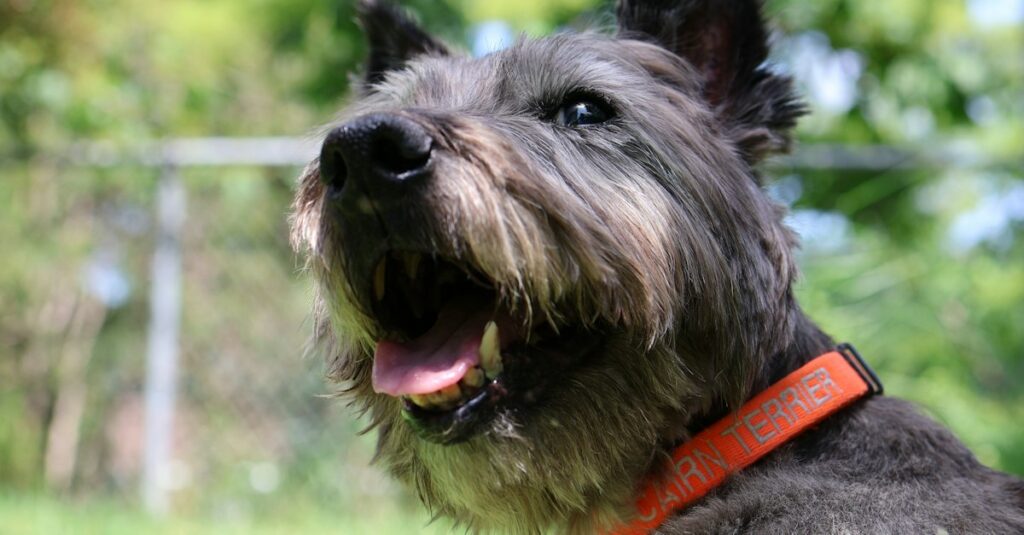
This dog collar size chart shows which collar size fits a specific neck measurement, ranging from XXS for toy breeds to XXL for giant breeds. Use the size finder below to get your dog’s size from a neck measurement, a breed or a weight, along with the length to set the collar to and the width that is suitable for a dog of that size.
Fit is more important for dog collars than for just about any other piece of dog equipment. If a collar is too loose, a scared dog can back out of it beside a road. If a collar is too tight, it will continually rub on the skin and coat and cause coughing. Both of these problems can be avoided by using a tape measure for thirty seconds.
Dog Collar Size Finder
Measure your dog’s neck if you can. If not, pick a breed or enter a weight for an estimate.
A real measurement always beats a breed or weight estimate. Size letters differ between brands, so buy by the neck range printed on the label, not by the letter.
Dog Collar Size Chart
| Size | Neck (inches) | Neck (cm) | Collar width | Dog weight | Typical breeds |
|---|---|---|---|---|---|
| XXS | 6 to 8 | 15 to 20 | 3/8 in | Up to 5 lb | Chihuahua, toy breed puppies |
| XS | 8 to 11 | 20 to 28 | 3/8 to 1/2 in | 5 to 10 lb | Yorkshire Terrier, Maltese, Pomeranian |
| S | 10 to 14 | 25 to 36 | 5/8 in | 10 to 25 lb | Shih Tzu, Cavalier, Havanese, Miniature Poodle |
| M | 13 to 18 | 33 to 46 | 3/4 to 1 in | 25 to 55 lb | Beagle, Pug, French Bulldog, Cocker Spaniel, Border Collie |
| L | 16 to 22 | 41 to 56 | 1 in | 55 to 80 lb | Labrador, Golden Retriever, Boxer, Husky, Bulldog |
| XL | 20 to 26 | 51 to 66 | 1 to 1.5 in | 80 to 120 lb | Rottweiler, Great Dane, large male German Shepherds |
| XXL | 24 to 32 | 61 to 81 | 1.5 to 2 in | Over 120 lb | Mastiff, Saint Bernard, Newfoundland |
The ranges in the dog collar size chart overlap on purpose. A dog with a 17-inch neck has two options: the top of a medium or the bottom of a large. For an adult dog, choose the size where your dog’s neck measurement falls approximately in the center of the range, so there is room to adjust both up and down. For a puppy that is still growing, choose the size where the measurement falls as close to the lower end of the range as possible.
How to Measure a Dog’s Neck for a Collar
- Use a soft tape measure, or a piece of string that you then lay against a ruler.
- With your dog standing, wrap the tape around the neck where the collar will sit. For most dogs that is the base of the neck, just above the shoulders.
- Pull it snug against the coat without squeezing. Read the number.
- Add 1 inch for a small dog, 2 inches for a medium or large dog, and 3 inches for a giant breed. That is the collar length to look for.
- Check the answer with the two-finger rule once the collar is on.
For thick-coated dogs like Huskies, Samoyeds and Chow Chows, part the fur and measure against the neck itself, then use the bigger allowance, because the coat fills the gap. Measure after grooming if your dog is clipped regularly, since a full coat may add one inch.
The Two-Finger Rule: How Tight Should a Dog Collar Be?
You want to be able to slide two flat fingers between the collar and your dog’s neck when the collar is fastened. If there isn’t enough room for that, the collar is too tight. If you can easily fit your entire hand in, or if you can pull the collar forward over your dog’s ears, it’s too loose. For toy breeds use one finger, because two adult fingers are a large share of a six-inch neck.
| Problem | Signs | Fix |
|---|---|---|
| Too tight | Coughing or gagging, hair loss or redness under the collar, scratching at the neck | Loosen one hole, or go up a size |
| Too loose | Collar slides over the ears, turns freely, dog can get a paw or jaw caught in it | Tighten, or go down a size |
| Too wide | Collar digs into the jaw or shoulders when the dog looks down | Choose a narrower width |
| Too narrow | Thin collar on a strong dog concentrates pressure on the throat when they pull | Choose a wider collar or switch to a harness for walks |
Dog Collar Sizes by Breed
| Breed | Typical adult neck | Collar size |
|---|---|---|
| Australian Shepherd | 16 to 20 in (41 to 51 cm) | L |
| Beagle | 12 to 16 in (30 to 41 cm) | M |
| Border Collie | 14 to 18 in (36 to 46 cm) | M |
| Boxer | 16 to 22 in (41 to 56 cm) | L |
| Bulldog (English) | 16 to 20 in (41 to 51 cm) | L |
| Cavalier King Charles Spaniel | 10 to 14 in (25 to 36 cm) | S |
| Chihuahua | 7 to 11 in (18 to 28 cm) | XS |
| Cocker Spaniel | 12 to 16 in (30 to 41 cm) | M |
| Doberman Pinscher | 16 to 22 in (41 to 56 cm) | L |
| French Bulldog | 12 to 16 in (30 to 41 cm) | M |
| German Shepherd | 18 to 24 in (46 to 61 cm) | L |
| Golden Retriever | 16 to 24 in (41 to 61 cm) | L |
| Great Dane | 20 to 26 in (51 to 66 cm) | XL |
| Labrador Retriever | 18 to 24 in (46 to 61 cm) | L |
| Mastiff | 26 to 34 in (66 to 86 cm) | XXL |
| Pembroke Welsh Corgi | 14 to 16 in (36 to 41 cm) | M |
| Pomeranian | 8 to 12 in (20 to 30 cm) | XS |
| Pug | 12 to 16 in (30 to 41 cm) | M |
| Rottweiler | 22 to 28 in (56 to 71 cm) | XL |
| Shih Tzu | 10 to 14 in (25 to 36 cm) | S |
| Siberian Husky | 16 to 22 in (41 to 56 cm) | L |
| Yorkshire Terrier | 7 to 11 in (18 to 28 cm) | XS |
What Size Collar for a Puppy?
Buy the collar for the neck your puppy has today. A collar bought to grow into is one that the puppy can easily slip out of, and puppies are the most prone to bolting. Buy an adjustable collar with today’s measurement as close to the smallest setting as possible; this way, you will get several months out of it. Accept that a large-breed puppy may require two or three collars during its first year.
- Check the fit every week. Puppies can outgrow a setting in days during a growth spurt.
- Re-measure every two to three weeks until growth slows.
- Start with a light, narrow collar. A heavy buckle is uncomfortable on a ten-week-old.
- Take the collar off in the crate, where tags can catch on the bars.
New puppies often scratch and freeze the first time a collar goes on. Our guide on how to train a puppy to accept a collar covers that, and the puppy weight calculator shows how much growing is left.
Collar Width: Why It Matters
The width of a collar spreads pressure. A wider collar puts the same pull over more of the neck, which is kinder on a strong or long-necked dog. On the other hand, a wide collar on a small dog weighs him down and stops him lowering his head comfortably. Generally speaking, toy dogs wear collars about 3/8 to 1/2 inch wide, small breeds 5/8 inch, medium dogs 3/4 to 1 inch, and large dogs at least 1 inch.
Greyhounds, Whippets and other sighthounds are the exception. Their necks are wider than their heads, so they need a wide martingale or a collar designed specifically for sighthounds, approximately 1.5 to 2 inches in width, that cannot slide off and that protects a long, delicate neck.
Collar Types and How Sizing Changes
| Collar type | Best for | Sizing note |
|---|---|---|
| Flat buckle or clip | Everyday wear and ID tags | Size by neck measurement plus 1 to 3 inches |
| Martingale | Dogs that back out of collars, sighthounds | Must fit over the widest part of the head. Measure head and neck |
| Rolled leather | Long or silky coats | Runs small. Go up if between sizes |
| Breakaway | Dogs left alone together, dogs that play rough | Size as a flat collar. Not for lead walking on its own |
| Head collar | Strong pullers, under a trainer’s guidance | Sized by muzzle and neck. Follow the maker’s chart |
For walking, many dogs are better in a harness, especially small breeds, flat-faced breeds and determined pullers. See the dog harness size chart, and for training equipment, our review of the best dog training collars.
Related Reading
- How to Train a Puppy to Accept a Collar
- Best Dog Training Collars
- Leash Training for Puppies
- How to Stop Leash Pulling
- Best GPS Trackers for Dogs
FAQs
How do I know what size collar my dog needs?
Measure your dog’s neck at the point where the collar will sit. Then add about an inch for a small dog, 2 inches for a medium or large dog, and about three inches for a giant breed. Choose a collar whose adjustment range includes that number, preferably as close to the middle as possible, and confirm the fit with the two-finger rule.
What size collar does a Labrador need?
Most adult Labradors measure 18 to 22 inches around the neck and wear a large collar that is 1 inch wide. Big males with a neck larger than 22 inches need an extra large. An 8-week-old Labrador puppy typically starts on an extra small or small collar of approximately 8 to 12 inches and will move up two or three sizes.
How tight should a dog collar be?
Snug enough that it cannot slip over the head, but loose enough for you to slide two fingers flat under the collar. For toy breeds one finger is enough. If the collar leaves a dent in the coat, causes coughing, or has rubbed the hair thin, it is too tight and needs to be loosened or replaced.
Is collar size the same as neck size?
No. Neck size is the measurement of the dog. Collar size is the length the collar needs to be to fit comfortably, which is the neck measurement plus 1 to 3 inches of ease. Collars are sold by the range of neck sizes they adjust to, so match your dog’s neck size to that range.
Should a dog wear a collar all the time?
A flat collar with an ID tag is a good idea whenever your dog could possibly get out, and in some places it is a legal requirement in public. Take the collar off when your dog is in a crate, during rough play with other dogs, and at night if your dog is safely indoors. This prevents the collar from catching on something and allows the skin and coat to breathe.
How often should I check my puppy’s collar?
Check how well the collar fits every week, and re-measure your puppy’s neck every two to three weeks. Puppies grow in spurts, and a collar that fitted on Monday can be tight by the weekend. Large-breed puppies often require a new collar every two to three months during the first year.